In Serbia, it seems that it is easiest to pronounce the most severe condemnation. In the absence of large-scale court proceedings, which should be the state's way of dealing with mafias of all kinds, convictions arrive at various addresses from all sides, creating an atmosphere in which everyone is guilty, everyone is dirty and everyone is corrupt.
The imposed story about the criminal nature of the government that ruled Serbia since 2000 and turned into an election tool in the hands of disguised radicals in 2012, turned into a sledgehammer with which to hit anyone who has a different opinion or does not agree to what the regime offers. Thus, a division was created in the country between the honest, those who are in power or with it, and between thieves and criminals, which means all opponents of the current regime. The first holding all the power present themselves as good, while the political and social margins are placed in the ranks of criminals who still avoid the sword of justice only because justice itself is a part of crime.
On the other hand, what is not the government and with the government, sometimes goes to the extreme and tries to overpower and outwit the regime, shouting that criminals are actually in power and that it is one clan that rules Serbia by force and sword, robbing all its resources. In that cruel game, where the Serbian Progressive Party imposed language and rules, nothing is known and nothing can be certain.
However, the tails that appeared during the almost eight years of power of Aleksandar Vučić and his partners remain for all time. It is difficult for him to explain why there is no major case of dealing with a mafia organization and why there is nothing in court about what appeared in the media outside the regime's control about the corruption of the government.
This is noted by all important organizations around the world, and the last such report is that of Freedom House: Serbia is no longer a democratic country, its institutions are partially functioning, the fight against corruption and crime is declarative. This report, perhaps more important for developing countries than the World Bank's Doing Business list, coincides with the lifting of the state of emergency and increased violence on the streets of Belgrade.
In addition, the Belgrade section of the OCCRP (Organization for the Fight against Crime and Corruption) published on the Krik.rs portal a dossier on two large Montenegrin mafia clans, which summarizes the black series of murders in recent years - many in Serbia as well - but also Danilo Vučić, the son of Aleksandar Vučić, brings him into contact with members of one of the clans.
The "Klans File" brings together in one place everything we have read so far about the activities of the Kavački and Škaljar clans and gives ammunition to the bazaar to spread the word about who delivered the report made in the BIA to the journalists (because almost everything refers to some report of the Serbian secret service), and why, in the days when part of the public is debating whether the red line of the attack on Dragan Đilas and his family has been crossed, the ball returns to the court of the Vučić family and attacks on Danilo, the eldest child of the President of Serbia.
In addition, in the last ten days in Belgrade, there have been several violent confrontations between fans, which in the days when there is no football and other sports shows that they have long had nothing to do with sports, but that they are an instrument in the hands of the authorities or the mafia. As the days and weeks go by, and the situation becomes more or less normalized, Serbia will surely return to its pre-corona state. Then many questions will be answered. For example, in what way are the state and the mafia connected, can Serbia even deal with organized crime, who commits it and who is responsible for the murders that have seriously disturbed the Serbian public in recent years, such as the murder of Oliver Ivanovic and lawyer Misha Ognjanović.
KRIK: WHAT HURT WHOM??
If the journalists of the Krik portal had not published a previously unknown photo of Danilo Vučić, few would have reacted to their extensive text about the activities and behavioral characteristics of two large Boko Kotor clans. Journalists have been doing what they have been doing for ten years, since the fall of the Šarić brothers' clan from Pljevlja: they follow the activities of organized criminal groups in the Western Balkans and beyond, so it was in their job description to tell a comprehensive account of Škaljarci and Kavčani.
The dossier on drug traffickers from Montenegro is spiced up in the part that deals with their already known influence in Serbia: the drug cartel partly relies on the services of local gangs / fan groups, which serve to disguise their true job description with the tribune and "love for the club".
Since 2016 and the unresolved liquidations of Aleksandar Stanković - Salet Mutavo in front of the gym on Vračar in Belgrade, there has been uncertainty about the degree and form of involvement of various fan groups in the affairs of organized crime and specifically clans from MZ Škaljari and MZ Kavač in the city of Kotor, Montenegro.
The analysis presented by Crick, with a lot of amazing details that would be useful tomorrow for the creators of some Balkan version of Narcos or The Sopranos, and which is actually one of the highest independent praises for the Serbian secret service (most of the references from the file are taken from the BIA report), it was completed with what the BIA did not deal with in such a "transparent way": the case of the liquidation of Saleto Mutavo and the relationship that Danilo Vučić has with people who are in the police they lead with books about crime as members of a drug cartel.
When it comes to the role of Salet Mutavo, this matter is more or less clear: since 2013, he had a special task to establish control among Partizan fans, and he succeeded with his Janjičari group with violence and brutal methods of dealing with those in the stands who they didn't want to listen.
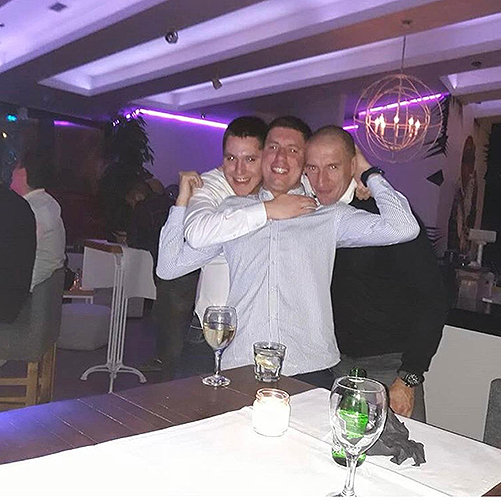
When it comes to the second topic, the place of Danilo Vučić, one should be careful: what the Krik text and photos show is that he is often in the company of people with a criminal background. The photo published in the text that "Vreme" brings here was "taken" from Instagram and records a moment from a party in which Danilo Vučić participated. His relations with the fans have been known for a long time and Aleksandar Vučić also spoke about it in one of his guest appearances on TV Pink. He himself confirmed that in 2014, as a teenager, Danilo was with a group of FC Rada fans when they wanted to stop the Pride Parade.
Danilo, obviously, from his teenage days did what his father did and what he could hear from him personally and on television, but also from his uncle, grandmother and grandfather: fans, stands, matches and sometimes violence, which is folklore of fan and hooligan groups. Photos from the World Cup in Russia, a photo from the Serbian Day celebration this winter in Banja Luka and these photos from a party show that some of those hooligans are his friends, which does not necessarily mean that he himself is part of such and such a "world" ". The problem is really that he, the son of the President of the Republic, appears in such a society. If Vučić, who normally declares himself about everything, would explain it, he would probably shut everyone's mouth and show that his son really does not participate in any business related to crime.
On Sunday, May 10, 2020, Željko Mitrović spoke about what Danilo does on his TV Pink when he said that he is Somali, works in a winery and that he often visits him. Apart from that story, another media worker mentioned Danilo - the editor of "Serbian Telegraph" Milan Lažević. In one of his television appearances, he said that Danilo had problems with alcohol, but that it is now behind him. It is understood that Danilo came into the spotlight during the epidemic when it was found out that he was positive for the corona virus.
The question arose whether the publication of such content about the son of the President of the Republic within the text about drug clans is the criminalization of that young man or a cheap attack on Vučić? The tabloids couldn't wait to start attacking Krik and the editor Stevan Dojčinović (one of the most awarded Serbian journalists), putting everything in the context of political struggle and the poor use of children in political activities. Danilo is undoubtedly the child of the SNS president, but also a grown man at the age when his father was already well into politics. It is also true that "his case" is instrumentalized in the absence of stronger evidence for a direct link between this regime and the mafia.
It is possible to imagine Vučić trying to solve his situation with his son and to "separate" him from his old society, rather than supporting him to go and sell drugs and be part of a clan that kills both here and in the region and around the world.

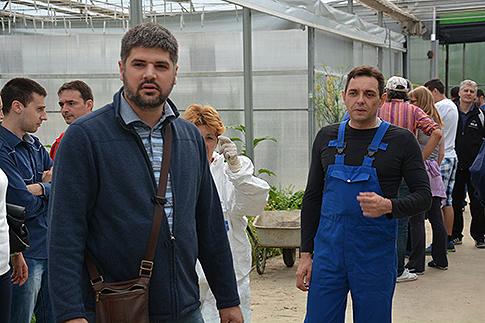
photo: minrzs.gov.rs"PLANTAŽER": P. Koluvija with A. Vulin in Jovanjica
KOSOVO CYCLE
And while that case slowly fades in the public occupied by new and new sensations on the political scene of Serbia, life "returns" to normal, and with it old questions about some unsolved murders with a strong echo in the public.
Aside from criminal confrontations, murders of members of one, another or a third clan, fan chases around Belgrade in which those who "recognized Vučić's rule" are dealt with those "who prove themselves to be even greater subjects", in which hired killers are sent to in the middle of the day in the center of Vračar, an elite Belgrade municipality, they are chasing the stragglers of a clan. The issues of the murder of Oliver Ivanović and Miša Ognjanović, a well-known Belgrade lawyer, as well as the issue of the criminal prosecution of Aleksandar Obradović, a whistleblower from Krušik in Valjevo, and the trial of the mayor of the municipality of Grocka and the SNS official who organized the burning of the house of journalist Milan Jovanović still remain unfinished.
In addition, the "Jovanjica case" should gain momentum considering that the prime suspect for growing a ton of marijuana on the plantation near Stara Pazova, Predrag Koluvija, spent months in pretrial detention.
photo: Vesna LalićGRAND COORDINATOR: Zvonko Veselinović
When it comes to the murder of Oliver Ivanovic in January 2018, it is still behind the neck of the regime in Belgrade because one of the people that Pristina is looking for is Milan Radoičić, an associate of Zvonko Veselinović, one of the biggest road builders in Serbia. The authorities in Belgrade have repeatedly repeated that it does not occur to them to "extradite" Radoičić, and he appeared at several meetings that the "Kosovo Serbs" had in Belgrade with Vučić.
It can be said, as in any other judicial case, that there are two truths: that Radoičić has nothing to do with the murder, although in the indictment of the Kosovo Prosecutor's Office he is labeled as one of the leaders of a criminal group. He is still an important player for Belgrade and a man who "helps" to maintain the influence of the Vučić regime in the north of Kosovo, and on the other hand, a man involved in major criminal affairs and is needed to ensure what criminals from both the Albanian and from the Serbian side Prokletije.
Over time, Radoičić became a political figure, but this could easily turn into Vučić's political card when it is his turn to "do something about Kosovo". It is about what everyone believes is the task of every government in Belgrade and Pristina, which is mutual recognition. If it comes to the point that Serbia wants or needs to show good will, it is quite possible that Milan Radoičić will find himself in custody in Pristina.
This will certainly not happen to his compatriot Zoran Milojević Zelja, one of the leaders of the MTS in Kosovo and the SNS commissioner for Eastern Serbia, and a "hidden investor" in the case of illegal construction on Pančićev vrh on Kopaonik. He is part of the system "within Serbia", he has an important place in the progressive hierarchy, and the coordinator position gives him the opportunity to manage the entire region and greater power than the presidents of municipalities and mayors. This Kosovo cycle does not end here: it has its branches in Kraljevo and its surroundings. In recent years, this part of Serbia has become an eldorado for some corrupt policemen, security guards and pure mafia - drug dealers. All of them have some connection with some electricity in Kosovo.
And while the Minister of Police, Dr. Nebojša Stefanović, worries whether he will remain part of the team or whether his resignation has already been signed, internal party factions are taking their place before the decisive elections. Functions are already being delegated and names are being released around the bazaar: the leader of the team of coordinators Darko Glišić from Ub should go as the head of the BIA, and Bratislav Gašić to the powerful business position of the director of Corridor Serbia. Vojvodina staff Zoran Gojković emerged in the crisis; it seems that today he is more important and influential than Miloš Vučević and Igor Mirović, and potentially seen for a much higher position than the current one - Secretary of Health of AP Vojvodina.
WHY ALL THAT
All these transformations and a new possible distribution of cards are made under the feeling that the party in power has a secure position that foreigners call a "captured state" and that it is only a question of who the supreme leader will like more. However, after the eight-year rule of the progressives, it will be seen if they can still attribute all the bad things to those before.
Something else is certain: during the period of the dominant government of Boris Tadić, it is impossible that there was collaboration with murderers, hooligans and the mafia of any kind. Tadić's cabinet "took over" control in 2008 by arresting and extraditing Radovan Karadžić, a convicted war criminal. He also confirmed his commitment to the fight against crime with the Balkan Warrior action in 2009 and the showdown with the powerful Šarić clan in 2010. A year after that, Ratko Mladić was extradited, labeled by the world public as one of the biggest criminals after World War II.
This bold approach in the fight against criminals did not bring any political points: the government was lost in 2012 because of the opponents' story that Boris Tadić and his political comrades are real criminals and thieves of world proportions. Although this government actually fell in Kosovo (and the prosecution arrested the brothers Veselinović and Radoičić during the time of Boris Tadić), the story of internal theft and thieves in power prevailed in the electorate.
It seems that Vučić, among other things, has learned that lesson, so he doesn't worry much about the fight against the real mafia. He is sometimes excited by opinions from the outside that say that there is crime, that the state does not do enough, that corruption is never dealt with... But, you can see, this concern quickly passes and he continues to make secret and semi-public agreements with people who far from "pure before the law".
So far, his assessment is clearly correct: no one can publish something in the few independent media that have passed, which he cannot deny in all other media and turn it to his own mill. So far he is absolutely succeeding, and the other side of the public, the one that is scared by people under phantoms and with hecklers, can only state, record and try to keep their heads alive.