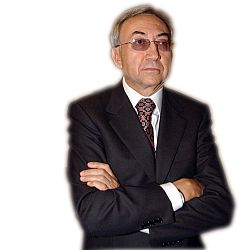
Miroslav Mišković, the first man of Delta Holding in Belgrade, who, according to a Warsaw newspaper, is personally worth about 1,5 billion euros, is again under the scrutiny of the Slovenian and Serbian media - because it was announced that he has found himself in the Serbian-Croatian-Slovenian society businessmen who intended to mutually "mix" the ownership of three large, domiciled commercial retail chains in the Balkans - and thus, each in their own backyard, resist the announced invasions of trade giants from large Western European countries on ours Peninsula.
The big affair that was created around the Slovenian trading house Mercator, that is, about Delta's planned investment in this company, has a special charm in the big Serbian chatterbox in that Mišković himself does not advertise himself with any statements or interviews. As well as when he left Milosevic's Serbian government in 1991, as well as when he financed Mirjana Marković's Julovci in the mid-nineties, as well as when he provided financial support to Đinđić's DOS in 2000, as well as when he was kidnapped by the Zemun clan in 2001 .
PASSIVE VICE PRESIDENT: For all the past 15-16 years, as long as he has been on the main economic scene of Serbia, if memory serves him well, he participated in a TV duel only once (against Živko Pregl, the Deputy Prime Minister of the Federal Government, Ante Marković, on RTS in 1990), he gave one or two "served interviews" to the Belgrade "Nedelj telegraf" and made two or three short public speeches at his company's birthdays. And those who know him, at the same time, claim that he is not a silent person at all. That silence, which resonates so much, can be explained in many ways - but here at least two hypotheses should be presented: either his affairs and plans are such that it is never convenient to talk about them, or his experience tells him that he works in a country where the public is bad an ally, but an excellent enemy. Let's try, however, to sketch his "business profile", not "according to a living model", but according to the business actions he undertook.
Miroslav Mišković was born in Kruševac in 1945. After graduating from the Faculty of Economics in Belgrade, he worked in the foreign exchange department of Jugobanka in his hometown. From there he briefly moved to Trial, and then to the neighboring Chemical Industry Župa, where he was soon elected general manager (in 1982). As a successful businessman, in 1989 he received the prestigious Yugoslav Avno award. These were all the arguments that prompted Radmila Anđelković, the famous Rada Lambada, a staff member of the Socialist Union of Serbia, to propose Mišković to the already all-powerful Slobodan Milošević as prime minister of the Republic, that is, as president of the Executive Council of the Assembly of the SR of Serbia. The latter, however, had already decided on Dr. Stanko Radmilović, so Miroslav Mišković and Duško Mihajlović only pro forms, due to the "public discussion of several candidates", were competitors for this high office, and later (on December 5, 1989) they were elected vice-presidents of the RIV (the same title in that body was also held by Momčilo Trajković, Dr. Živadin Stefanović and Filip Grujić).

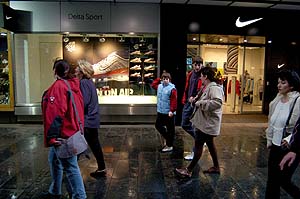
BRANDS: Sport...
To Mišković's disappointment, it quickly turned out that being the director of a socialist company (in which he was already used to not having to open any doors himself) was a much more powerful, lucrative and effective position than the position of a vice president in charge of the "rapid recovery" of Serbian industry. - who then could not give orders, but only convince his old colleagues in the field, what they should do "in the public interest", and dreams of what is to the liking and what is not to the main political boss. Witnesses claim that the pretentious Mišković was already "fed up" with a high state position within a few months and realized that he found himself in a position that does not promise quick success, but rather a painful struggle for the corpse of the SFRY - all the more so because he immediately became ill and that his understanding of the privatization process of the Serbian economy, most people around him consider him "premature". He procrastinated in his post for another seven or eight months, doing almost nothing politically, because at that time Milosevic was not comfortable with his own government disintegrating in the middle of Yugoslavia's disintegration. Mišković gave up the race for the new government, which was formed after the first multi-party elections (February 11, 1991), when Dr. Dragutin Zelenović took the position of prime minister.
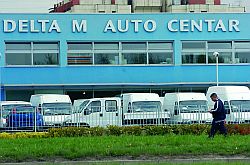
Allegedly, he did not even try to return to the "social economy" of that time, but rented a room in the hotel "Slavija" in Belgrade and immediately founded the import-export company Delta M (double M - Miroslav Mišković). It should be borne in mind that from the time he directed Župa, which was successful because it practically only mixed imported chemicals, he knew very well that importing companies from Slovenia were also making good money in Serbia, supplying its industry with imported raw materials - so he was the first the economic war with Slovenia opened the possibility for him as an importer to "substitute" various goods that were previously delivered here by companies from Ljubljana and from other republics (and later to take their goods as well). However, some of his acquaintances say that he called the period of "getting used to" private affairs during 1991 as his "hardest days", because at first he allegedly worked completely alone, sometimes without a secretary.
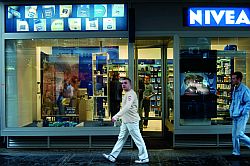
…cosmetics…
ESTABLISHMENT BANKS: However, as he had a lot of directorial and political connections and experience in foreign trade and foreign exchange operations, as well as in dealing with banks, those "difficult days" seem to have lasted very short, because he very quickly acquired the "first million marks", allegedly. "more on other people's stupidity than on one's own intelligence", as he once said. Rather, it will be that the secret of his lightning success was in another business belief, which he allegedly once admitted: not to do any business with the private Serbian sector, but with the directors of socially owned companies, who can be "serviced" within the framework of the "shade" of the increased price of the arrangement (which was more than justified by external sanctions). In fact, the mechanism of express enrichment in Serbia in 1991-1994. was based on simple operations in which export goods were "purchased" through cheap loans from state banks and the central bank, or produced in a joint venture with their own "foreign exchange raw material", and the profit was shared according to the dictates of the one who enabled production, or imported goods were and sold foreign exchange income for "hard currency" at the "commercial rate" etc.
When he made the first big bucks, he managed not only to move from Slavija to an apartment previously abandoned by Milošević himself, but also to enter the list of trusted and "worthy" businessmen at the time, who also gained the privilege of "rounding off" all those operations. and get permission to establish a business bank for themselves. Thus, Delta Bank also acquired a license to operate, based on a capital requirement of two to three million euros, and such licenses for banking operations, in the resale process, in recent years, are calculated in the price of transactions with hundreds of millions of euros (only Đelić, with Meridian Bank, it was cheaper). Delta Bank established itself relatively easily in the country, and quickly established, like many Serbian "private banks" at the time, its branch in Moscow - so the "transition exercise" could begin.
…fashion…
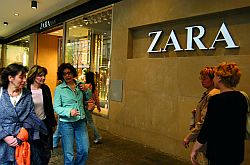
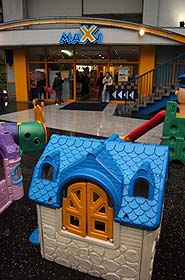
Mišković then, like Karići and a dozen other nimble "pioneers of the new Serbian capitalism", set out to build a wide-ranging "business empire" (all of them were obsessed with the previous successes of Genex and Inex, so they tried to replace them). The logic of this empire is that you should do everything that brings a quick profit, so Mišković in the following years embarks on everything and anything - he takes over the trade in sports equipment, establishes an insurance company, buys a company for the production of bicycles, a factory of detergents, mineral fertilizers, a retail chain of stores, and later he will become the exclusive importer and representative of the products of Fiat, Lancia, Alfa Romeo, Nivea, Moulinex, Ferrero, Nike, Speedo, Escada, Max, etc. However, unlike most of the Skorojevics in business, he shows that he knows how to do business in all conditions, not only in times of war.
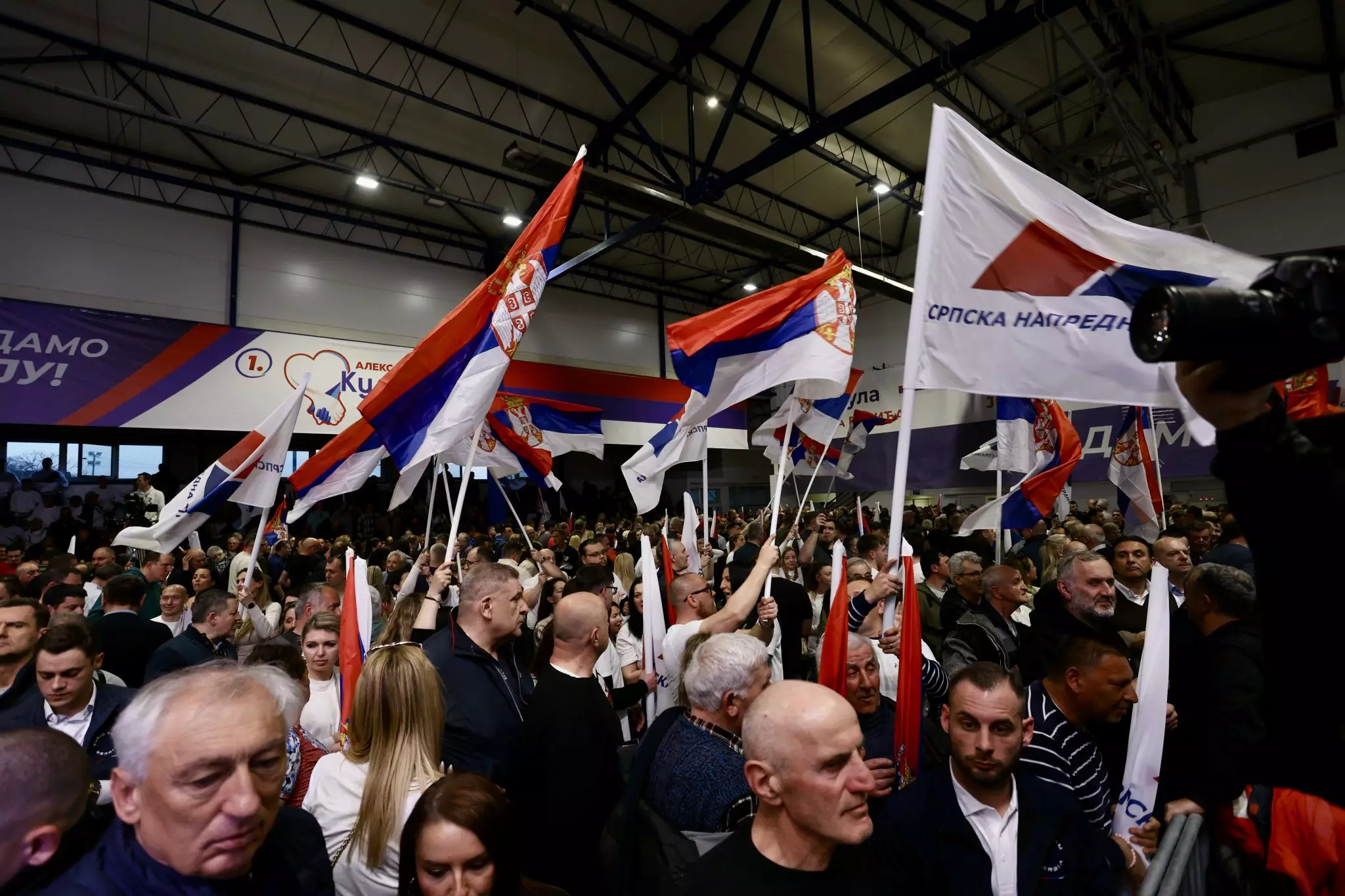
TYPING NA ĐINDĐIĆ: Although, as many claim, Mišković always paid "the emperor the emperor" and although at one time he did not avoid the suffocating embrace of the "financial political wing" of Milosevic's Front (JUL), at the end of the last century, there are indications that, when it came to time, began quietly, mostly indirectly, to invest in "democratic forces". Thus, one gets the impression, he welcomed October 5, 2000, more prepared than most other people with similar business careers, especially since he accurately guessed that the first leading man of the "new system" would be Zoran Đinđić, and his Democratic Party would be the backbone of the new government.
In truth, despite all that, Mišković will be on the famous list of "extra-profiteers" from Milosevic's time, which Prime Minister Đinđić selectively used for various reasons in the collection of extraordinary, subsequent taxes, so he too will pay something to the new government and on that basis, but he will be bypassed by the larger pressure that was heading in the direction of Karić. All the more so since he was probably well informed about the Government's doubts about what to do with the economic elite it found, because, possibly even on his recommendation, Nemanja Kolesar became the head of Djindjic's cabinet, a young man who started his craft right in the Delta. From that fact, however, one should not draw any very bold conclusions, because, for example, as the writer of these lines once heard, from well-informed sources, Prime Minister Đinđić did not accept that the project holder in a combination for the privatization of the oil industry in Serbia would be Delta Bank (which was proposed by the foreigners), but he offered that it should be Komercijalna Banka. It was similar when Mišković offered to buy a local newspaper and put it at the disposal of the government, not the president's influence - Đinđić did not accept it, etc. Ergo, one gets the impression that in the relationship between Mišković and Đinđić, the former was not too pushy, and the latter not only did not feel too responsible, but from time to time "begged" Mišković to contribute his money to some business operations of government agencies - when the budget was in a bind. Such requests, Miškovic knew, are never rejected.
Much later, Mišković will still complain about the period of "checking" his business during the transition from the old to the new system, so he will say: "Are only the good ones being controlled? Why doesn't someone control companies that went into bankruptcy or liquidation in the previous period? What about those who had all the conditions to do good business, but did bad business? This creates the impression that good is bad in Serbia. Because if someone works well, "there must be something hidden there".
…and cars
KIDNAPPING I SHOPPING: Taman Mišković completely stabilized after the changes in 2000, when at the beginning of 2001 he got into trouble under the direction of the local mafia, when the Zemun clan took over the subsequent redistribution of profits from the previous regime. It is already a well-known story about the kidnapping in New Belgrade (at eight in the morning, April 9, 2001), which, according to him, ended happily in the next 16 hours, because the National Bank of Yugoslavia on the same day (according to "Politica" of July 4, 2004) electronically paid a ransom of seven million German marks to an anonymous Swiss bank account, so he was released, after midnight, somewhere in the center of Belgrade. Later, he cautiously stated that the kidnappers treated him fairly, but that he could not recognize them. Soon the kidnappers (Dušan Spasojević and company), as is known, will be arrested in France - but "in the absence of evidence" they will be released. It is another affair that serves to embarrass the Serbian judiciary and the then government.
Nevertheless, when observing the financial rise of Delta Holding, it can be noted that it was only in the period "after Milošević" that it made its way to the very top of the Serbian economy (it is the second most powerful, according to many indicators), and the period after 2002 is particularly significant in its dizzying rise. year. Thus, in the last four years, Mišković bought Pekabeta, Sunce, Juhor, PZP "Beograd", Autokomanda, Podunavlje, Bazar, Seme, Obuća, agricultural goods Napredak, Jedinstvo, "Sombor", and he is also a co-owner of PIK "Bečej" and a number of other companies. In Vojvodina, with about 20.000 hectares of land purchased or leased, it is already at the level of the largest landowners. After all, a company that this year predicts investments of 264 million euros, and already employs close to 16.000 workers - certainly deserves every respect.
When Mišković, however, started to enter the field of construction last year, and started to work in air transport, Velimir Ilić, the Minister for Capital Investments in Koštunica's Government of Serbia, on the television Braće Karić (with whom Mišković "made a family" by marrying his daughter Ivan for Goran Karić, son of Sreten Karić), showed that he had lost his temper, so in a rough monologue he asked Mišković "to slow down a bit" and to he does not interfere in everything (at the same time, in his simpleton style, he insulted Mišković's fragile stature). This outburst, in this place, led all observers to the conclusion that Karić's lobby no longer has Mišković's financial support.
In fact, when Kostunica's coalition emerged as the leader of Serbia after the DOS government, there was constant speculation as to how Mišković, who had previously gotten quite close to the now opposition Democratic Party, would be appointed. At the beginning of 2005, with a certain critical tone, at a meeting of the suppliers of Maxi, Pekabeta and Tempo (February 3, 2005), he addressed the new government: "I call on the Government of Serbia to start solving the biggest economic problems as soon as possible in cooperation with businessmen, such as and the media to deal more with economic topics. Only by creating a good climate for successful business can we strengthen our economy, and without a strong and successful economy there is no raising of the population's standard of living or solutions to the most important political issues. 15 years ago, according to economic indicators, Croatia was 20 percent more successful than Serbia, and Slovenia 55 percent. Today, Croatia is twice and Slovenia even three and a half times ahead of us. These are alarming data, but I have not noticed that those who should be worried about it."
In this speech, he also said something that will be fully understood only a little later, when the stories about Delta Holding's entry into the ownership of the Slovenian Mercator: "Competitive companies from our environment buy unhindered in Serbia and make new investments, and we, in an attempt to do the same with them, we encounter hidden obstacles and obstructions that cannot be overcome due to the politics of those countries." Recalling Delta's unsuccessful attempts, from a few years ago, to get a location in Ljubljana for the construction of the Maxi supermarket, Mišković also added that, by participating in the Slovenian stock exchange, Serbian companies can still buy a minimum percentage of the capital of one of their companies, but that a complete takeover is practically impossible.
CONTRACTION CAPITAL: It should be borne in mind that this public appearance by Miroslav Mišković followed, for Delta Holding's strategy, perhaps the most indicative decision on the sale of Delta Bank to the Italian Inteza Bank. Regardless of the seemingly fantastic price that was achieved in this transaction (277,5 million euros for 75 percent ownership plus an option for another hundred million euros for full ownership) - everyone asked why Miskovic is selling his bank at a time when many foreign banks are trying to enter the Serbian market. (Later they will sell Delta insurance, also to Italians – because it is usually bundled with the bank.)
Mišković explained it in the following words: "By selling the bank to a world-renowned partner, we enabled Delta Bank to enter the system of one of the most famous banks in Europe, which gives it a leadership position, and gives Serbia the opportunity to get a large world bank that will operate according to world standards . Making such a decision was not easy, but we were aware that Delta Bank could not compete on an equal footing with large global banks that provide long-term sources of credit. In addition, this was an opportunity for us to secure money that we will invest in the further development of Delta Holding, that is, in building the leadership position of this company in the field of trade and food production. Our goal is to further expand the network of three brands - Maksija, Pekabete and Tempa, and the priority is the markets of Croatia and Slovenia, and then the markets of Bosnia and Herzegovina, Montenegro and Macedonia, and to get more involved in the development of agriculture and the food industry. "
Therefore, everything pointed to the conclusion that when he talks about the direction of his investments towards Slovenia and Croatia - he is serious. That's how it was understood in Ljubljana, and a newspaper there immediately calculated that the capital that Mišković received from the Italians was worth as much as eight Fructals, three Perutnina Ptuj and one and a half Podravka. On this occasion, perhaps the closest speculations about the real intentions of the leading merchants of Serbia, Slovenia and Croatia were presented in the Croatian press at the beginning of this year. It was stated there that already during the previous fall, an agreement was reached between Delta, Konzum (part of Agrokor) and Mercator to "merge" into a joint company. In that agreement, it was allegedly conceived that those companies from this triangle, whose estimated value is not the appropriate amount (thirds), will enter the missing monetary value into the new "Balkan holding", but that only that part of their ownership will enter the joint venture. which is in the hands of the owners themselves who participate in the negotiations (Ivica Todorić, Miroslav Mišković and Igor Bavčar).
PLANS S MERCATOR: But the most interesting part of this speculation is that each of the members of the newly created holding would "cover its own territory", and this would allegedly mean that the part of Mercator operating on the Serbian market would be transferred to Delta, and the same would be true of Konzum's trading center, the construction of which Agrokor started in Belgrade - and Delta would pay for all of this by investing liquid assets in the property of Mercator and Agrokor. In fact, what is interesting in this speculation is the launch of the thesis that Miškovic invests in Slovenian and Croatian companies - only to take over their businesses in Serbia, that is, to achieve a monopoly in retail at home.
Later, on the visible level, it will turn out that Todorić is currently out of the combination, and that Delta holding in Slovenia is still encountering insurmountable political obstacles, because a significant part of Mercator's shares is outside the Ljubljana Stock Exchange, in the possession of Istrabenz and Pivovarna Laško. and that possession was made possible by the current Slovenian Prime Minister Janez Janša, who does not dare to cover them further in the latest plans with Mišković.
Mišković, however, does not give up on his plans, which he "expanded" in his traditional public speech for company day, at the beginning of February this year. Namely, he said on this occasion that his plan is to conquer the surrounding markets in the next three years - Macedonia, BiH and Montenegro, and then his goal is to break into Slovenia, Romania, Bulgaria, Hungary and Moldova. In this year's speech, he also made several remarks that had a wide resonance among the public. Thus, he sent a message to the critics of constant expansion (Velja Ilić) that "they cannot stand still in the Delta, because whoever stands falls", and that for the arrival of large foreign companies to our market, i.e. for the arrival of large investments, "a different behavior of our workers is needed , which was spoiled by self-management, and money will not come to a place where there are strikes almost every day and where roads are blocked". On the same occasion, he criticized Serbian politicians for carrying out two large purges of directors, during the time of Milošević and during the rule of DOS, and that "governments cannot create their own businessmen". In fact, Miskovic constantly varies his most famous statement: "It would be good if there was a Bill Gates in Serbia, but we don't have one." We are what we are, but you don't have anything better than us."
DINKIC'S WITHDRAWAL: Miroslav Mišković himself, however, cannot basically complain about almost any government under which he worked, not even the last one. For example, last year, Prime Minister Vojislav Koštunica personally mediated the transactions regarding the completion of the privatization of the C market chain, which was run by Slobodan Radulović for years. In the end, Mišković also got this company, and Radulović, according to local tabloids, was fired from the company, because, allegedly, many expired condoms were found in his stores. Kostunica recently, even before traveling to the prime minister's summit in Bucharest (which was held on April 6), where the Balkan free zone (Ceftoslavija) is being built, received Mišković and Beck and indirectly supported their efforts in the region (meaning also in Slovenia ), emphasizing the principle of free investment in all countries, according to the principle of reciprocity.
The Minister of Finance, Mlađan Dinkić, has also shown almost excessive favorability towards Mišković many times (and he did not touch Delta Bank even when he was governor), so even last year he told CORD: "As far as Mišković is concerned, he is one of the entrepreneurs who will survive every government, and as a respectable businessman, he has good relations with all parties that advocate for economic prosperity. Mišković never called the Ministry of Finance, and I'm sure neither did Kostunica to ask that something special be done for his company" ("Danas" from July 7, 2005). This spring, Dinkić, no longer knowing how to convince the people that the Government is trying something against inflation, hastily started with the story that trade margins are too large (alluding to monopolies), but that failed campaign did not bother him that in the Mercator affair, explicitly support Mišković, judging, perhaps, that his efforts in Slovenia are understood here as a manifestation of "economic patriotism". It turns out that, when it comes to patriotism, too high margins don't matter.
The quoted statements of our current state officials can be interpreted and analyzed in many ways, but one thing is certain - after the removal of Bogoljub Karić, it is not Miroslav Mišković's turn, so his planned "capital flight" from poor Serbia to rich Slovenia cannot be accommodated either. in the political context, but must be seen in the matrix of interests of a company that is expanding, in order to survive, and a dynamic and ambitious businessman, who in fact knows that capital has no homeland.