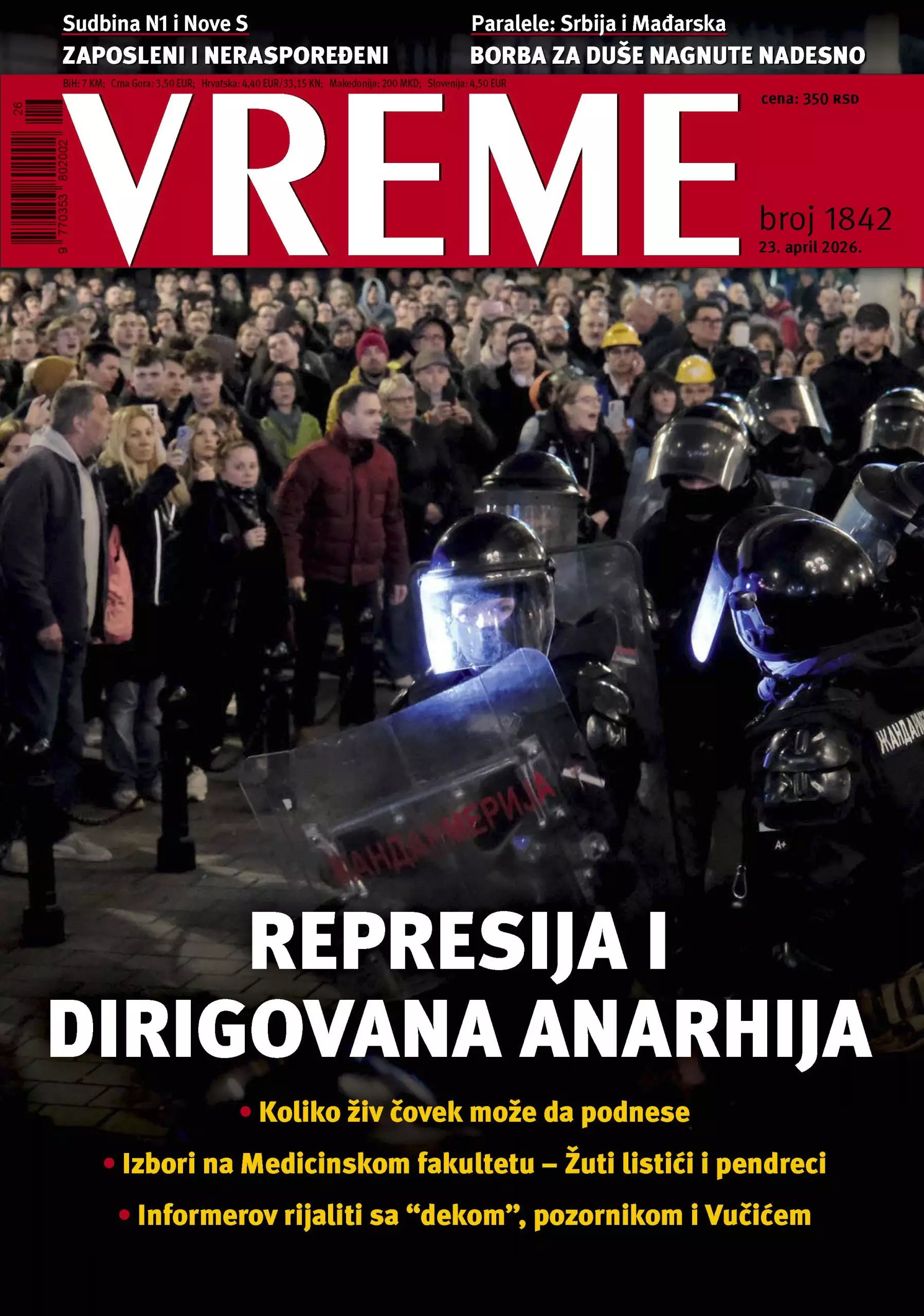
After escalation of repression in recent weeks and the recent announcement by Aleksandar Vučić that the state will implement fierce retaliation over citizens who have been protesting for months on the streets of cities and municipalities in Serbia, the public questioned whether the government, i.e. the Serbian Progressive Party, has definitely decided to raise street conflicts to the highest possible level, without holding back and without fearing the consequences of all this. Is the strategy - let's go to the end, so who will be stronger and who will survive? And what can such a strategy bring to the party in power?
Some say that the increase in repression and even greater announcements is aimed at regenerating fear among citizens. Progressives have ruled for years by promoting omnipotence and intimidation. Now that the fear has largely healed, they are quite confused and disoriented. They would like everything to go back to the way it was, but...
Psychologists say that the loss of fears is mostly an irreversible process. Few people, for example, have had dramatic childhood fears that some fantastic monster will pop out from under their bed in the darkness of their own room and take them to the forest. When the children grow up, they will only laugh if you scare them with the baba-horn. And the citizens grew up and saw on the spot that progressive power is actually a media-inflated phantasm.
Cynics claim that - if only Vučić and the progressives had asked - there would have been blood on the streets of the cities a long time ago, but it is fortunate that they are not the only ones asking.
That strategy, some say, foresees the mobilization of progressive clientist-voting squads which, in addition to the security forces and "usual" beating groups, should participate in the reproduction of fear. That is why progressive rallies are announced all over Serbia. Queuing in crisis situations can also aim to reduce vote churn and send messages to those who are undecided and confused.
There is no strategy, only reaction
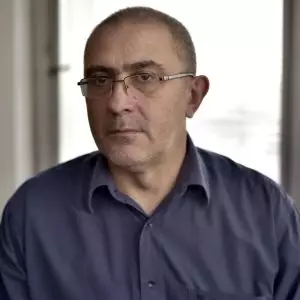
Political analyst Dejan Bursać from the Belgrade Institute for Philosophy and Social Theory in an interview with "Vreme" claims that the Serbian Progressive Party, in fact, does not have any strategy. If there were any signs of a progressive strategy to emerge from the social crisis in late February or early March, they have disappeared. Now it acts exclusively reactively, day by day. What is said today will be forgotten in a few days.
"Now we see a mere oscillation, both in the narrative and in the way the crisis is being tried to be resolved: from calls for conciliatory talks to the execution of the most diverse state and parastate structures capable of provoking and carrying out violence on the streets of Serbia. This has been going on for a very long time, the nervousness is increasing among the membership and among the decision-makers. The fact that Vučić decided not to make concessions and not to discuss the elections is not a strategy, but a lack of strategy," says Bursać, adding that the elections are not an issue because they, quite obviously, for the progressives, they are no longer a "safe field of political victory".
They are not even capable of repression.
State repression is something that will not bring anything good to SNS, Bursać believes. This party has neither the organizational structure and culture, nor such institutions, to be able to implement a totalitarian or authoritarian-repressive state in Europe in the 21st century.
"That party has always been chaotic, you don't know who drinks or who pays, everyone does everything. You only know who is at the top of the decision-making, and underneath everything is improvisation. In the past ten months, we have seen directors of state agencies, state secretaries, various other officials running through the streets with thugs. This speaks best of the state of the party and its scope. Such a structure is not capable of carrying out systematic repression, which of course does not mean that there have not been or will not be cases of fierce repression against individuals and groups. the chaotic structure, on which the pressure is increasing every day, is becoming more and more confused", added Bursać.
They also missed their own voters.
Bursać says that it is absolutely not clear what the SNS wants to achieve with its voters with the moves it has been making in recent months. It is clear that they are trying to appear stronger than they are, but this is more a psychological than a political necessity.
"Their main cohort of voters consists of older people who have gone through wars, transitions, economic crises... They strongly value stability. It is no coincidence that Vučić's slogan was 'Peace-Stability-Vučić'. From their point of view, Vučić provided them with that stability in the last 10-12 years, as much as they knew that stability was authoritarian and deeply corrupt. They had previously seen various chaos in society, so it seemed to them that things were much better in that respect," he says. Bursać.
With this behavior, the progressives are actually waving many of their voters.
"Instead of trying to induce stability, to present themselves as a factor of stability, they produce and encourage conflicts and social divisions on a daily basis. We are constantly in a semi-degenerate state. SNS voters are becoming more and more afraid, mistrustful and confused. At the same time, you are constantly encouraging the 'other side', which has completely freed itself from fear, because it has seen what a chaotic structure it is dealing with," Bursać told "Vreme".
And he concludes: it is obvious that in a party that still controls almost all decision-making levers, physical force, the vast majority of the media and state budgets - everything except legitimacy - there is no one who would sit down and rationally look at the situation, make a plan and strategy how to get this party out of this crisis. They are all like flies without a head.