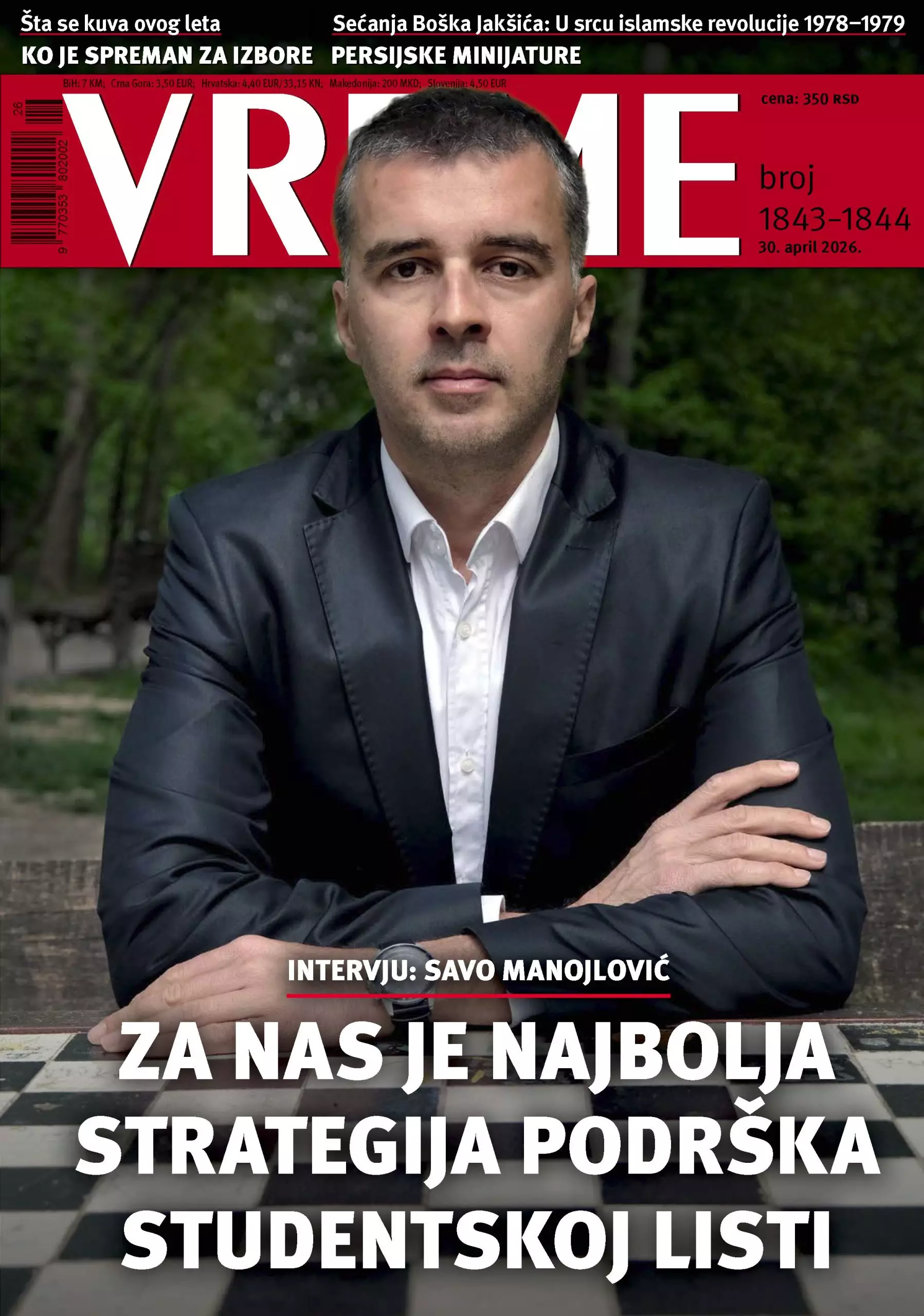
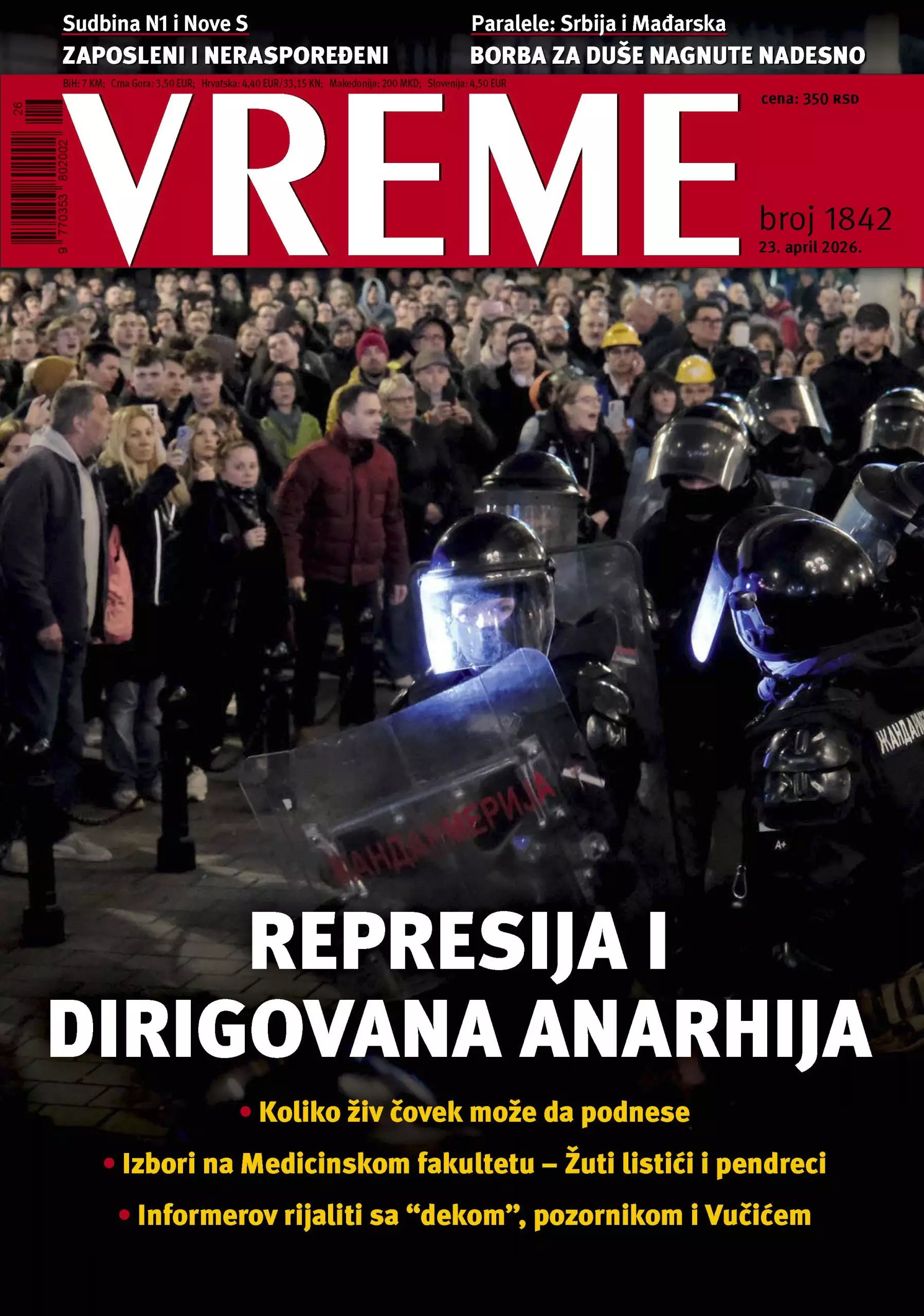
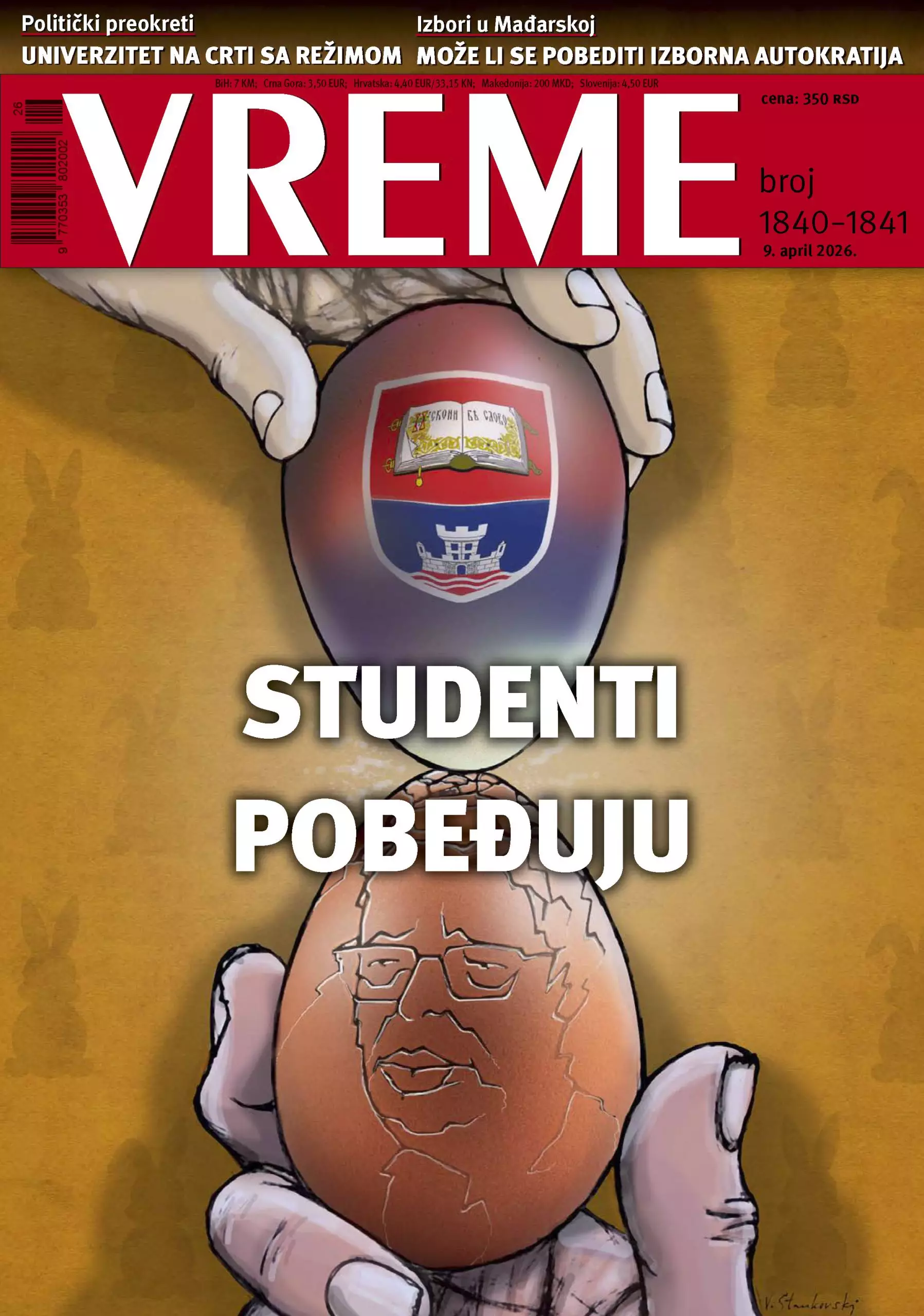
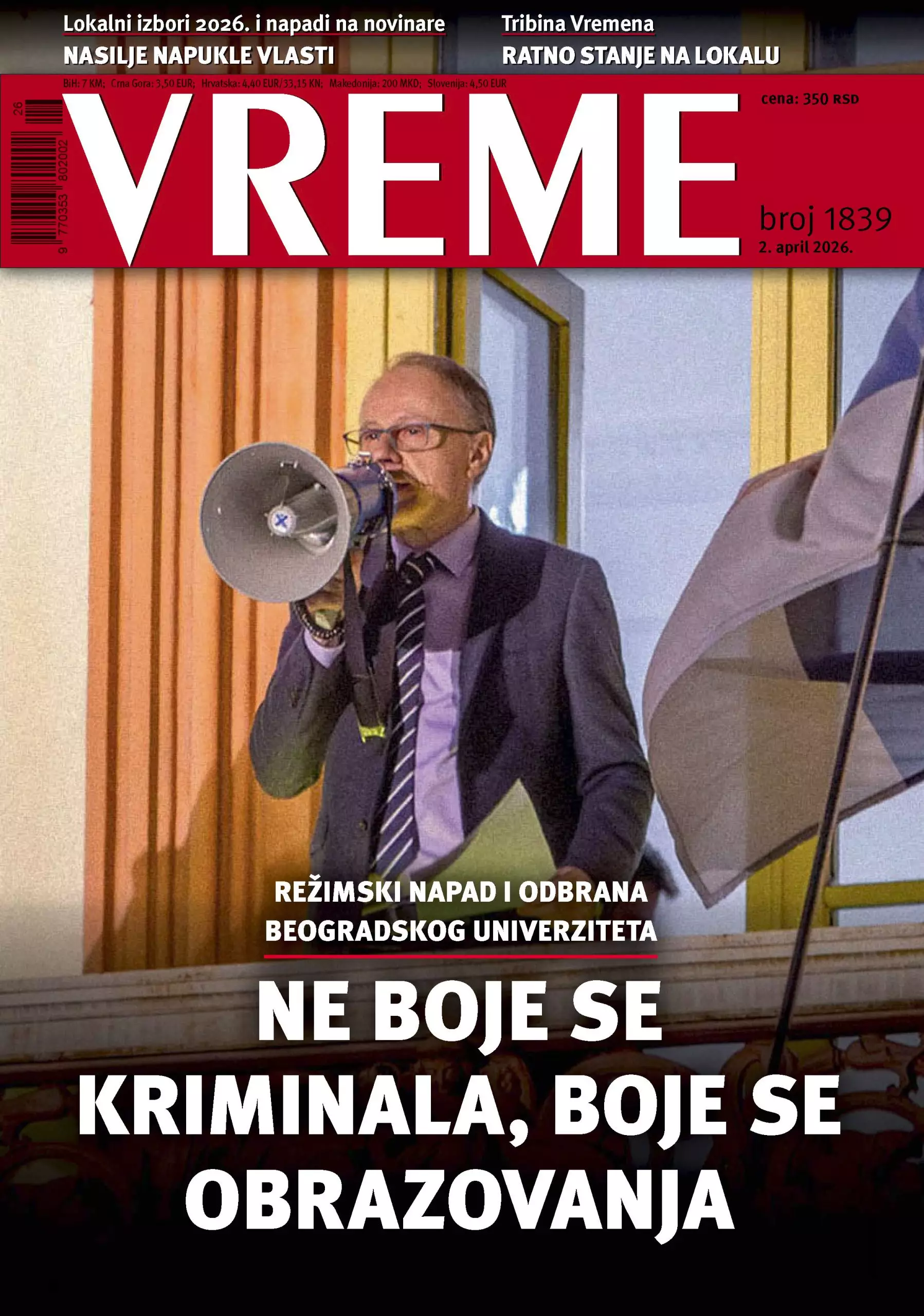
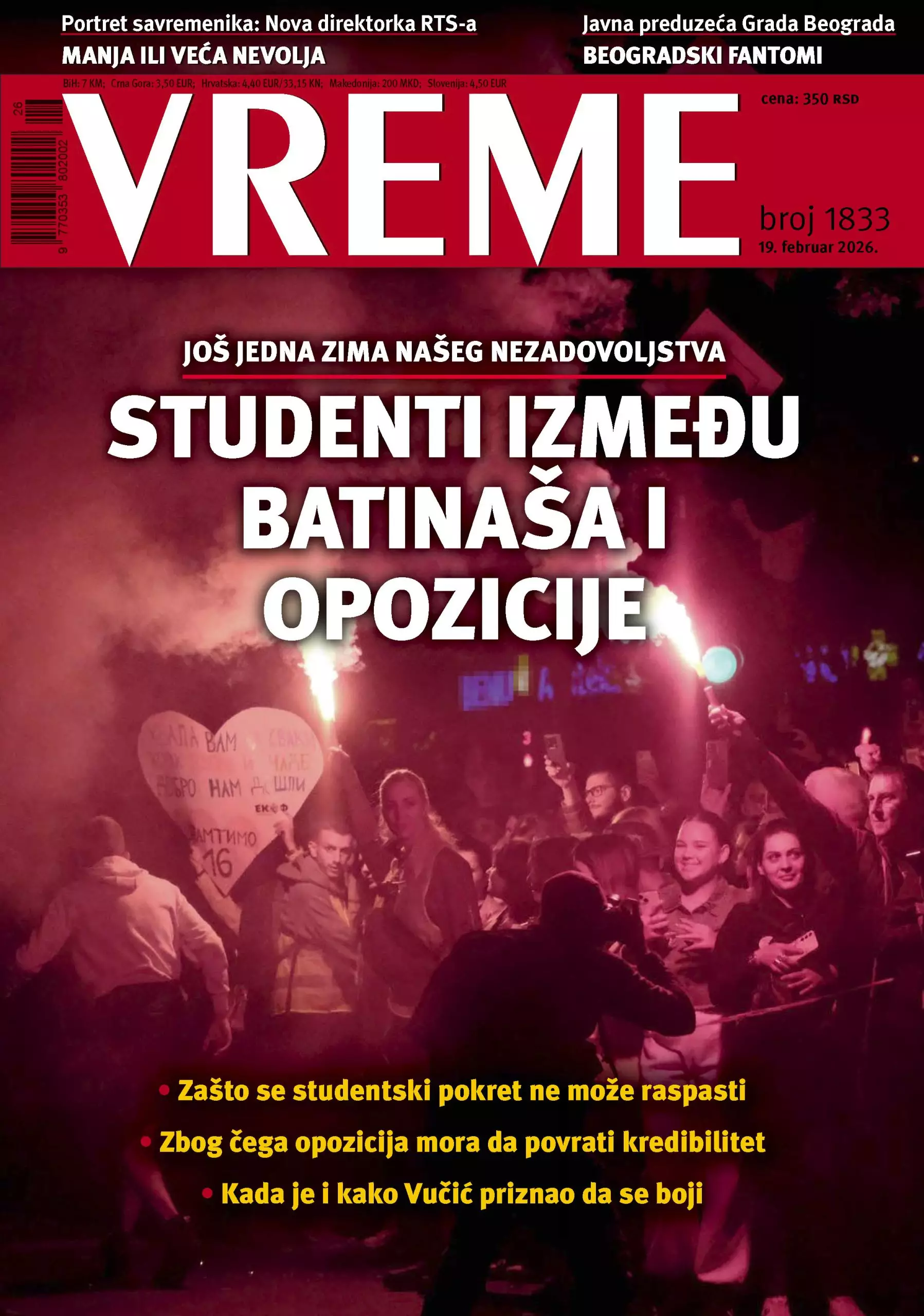
More than eight months since they are an official request to state authorities and the President of Serbia, Aleksandar Vučić in May 2025 requested the calling of extraordinary parliamentary elections, students in lockdown, who started the wave protest throughout the country, at the meeting in Novi Sad last weekend they presented the first points of his future political program.
Although the elections have not yet been formally announced, and the names of student list it still remains a secret, from their messages from the stage it is clear that, if they have the opportunity to influence the government, they will advocate for lustration and the full implementation of the Law on the Origin of Property. Exactly lustration should be the starting point of systemic changes and a way to determine responsibility for violation of human rights, abuse of position, but also for the death of 16 people in an accident at the railway station in Novi Sad.
"Lustration is a mechanism that makes it possible to determine personal responsibility and to ban those high officials who are responsible for human rights violations and abuse of position from performing public functions," said Antonije Stefanović, a student at the Faculty of Philosophy.
What is lustration?
Term lustrations in the Serbian public space, it has been causing strong and conflicting reactions for decades - from the fact that it is the "most expensive word in the transition", the belief that it is a prerequisite for any serious democratization, to the criticism that it is about the "persecution of political opponents".
Lustration is a mechanism of transitional justice that is applied in societies emerging from authoritarian systems or severe political fractures. Its purpose is not criminal prosecution, but the determination of moral and political responsibility and the temporary or permanent removal from public office of those who participated in the violation of human rights or the abuse of state power.
The word comes from Latin. lustratio, which means cleaning, purification, and in the political sense it means an attempt to "cleanse" the public space of the cadres compromised by the previous undemocratic order.
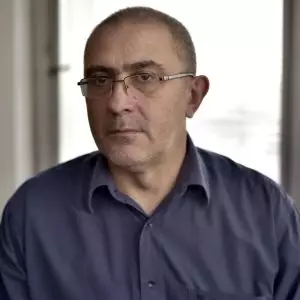
"The idea of lustration always arises when a society is trying to get out or is getting out of an authoritarian system and trying to establish democracy. The original idea of lustration meant that public officials were subject to it," he told "Vreme". Vesna Rakić Vodinelić, a lawyer who sat in the Serbian lustration commission more than 20 years ago.

Photo: Marija JankovićVesna Rakić Vodinelić sat in the first Serbian lustration commission
Why was lustration never carried out in Serbia?
Later on the October 5 changes in 2000, lustration was one of the key topics. Milosevic's regime was overthrown, but many of his personnel remained in the state administration, judiciary, police and security services. A law on accountability for human rights violations, known as the Lustration Law, passed in May 2003, came into effect the following year, but never took effect.
Law professor Vesna Rakić Vodinelić explains that the law remained a dead letter due to the complete absence of political will.
"The commission was never completed, because the opposition at the time, that is, SPS and SRS, did not want to propose their members. We had no support from the state, nor cooperation with the security services. The public was not very interested. That's why we resigned collectively in the end," says Rakić Vodinelić.
The Law on Lustration from 2004 included a large number of public officials, from the President of the Republic, members of the Government, all deputies, deans, rectors, judges, public prosecutors, directors of public companies, explains Rakić Vodinelić.
The law was limited to ten years and expired in 2014, and attempts to reactivate it remained without political resonance.
The interlocutor of "Vremen" adds that later there were several attempts, mostly coming from the League of Social Democrats, to reinstate the same law, however, that did not happen.
The law from 2004 was modeled after the Hungarian law. In that country, explains Rakić Vodinelić, lustration was relatively successfully carried out after leaving communism and entering liberalism, but the fruits did not last long because a regime that cannot be defined as democratic has been in power in Hungary for a long time.
What could lustration look like today?
Rakić Vodinelić says that the essence of lustration is not revenge, but individual responsibility with guarantees of a fair procedure.
"It must refer to public officials and to specific violations of human rights and abuse of position. If there are elements of criminal responsibility, then criminal proceedings should be conducted, and if not, lustration proceedings. Those two mechanisms can go parallel," she points out.
As a realistic time limit, he proposes the year 2004, when Serbia became a member of the Council of Europe and ratified the European Convention on Human Rights, in order to avoid retroactivity and violation of legal certainty.
Models from other countries are different, from lustration courts in Poland, to commissions in the Czech Republic and the former Czechoslovakia, where this process is rated as one of the most successful in Europe.
In Serbia, according to the "Vremena" interviewee, it would be realistic to start with one central state commission, with the possibility of later expansion.
"In order for lustration to succeed, strong political will and broad social consent are needed. Since the students are promoting it, and they are now a serious political force, I hope that this idea will spread. Of course, those who are now in office call it vindictive, undemocratic. All of this is not true, and especially no one from this government has the right to refer to democracy. However, even if it exists, the Law on Lustration is good and appropriate only when it deals with the individual responsibility of everyone for violating human rights and misuse of resources", says Rakić Vodinelić.
According to her, the idea was well received by the public, which could also be seen at the meeting in Novi Sad.
"There are enough people who are thinking about it, but everything is at the level of pure theory, as far as I know, and there are still no concrete solutions. It should really be understood that it should not be any revenge, but individual responsibility with all possible guarantees of a fair procedure", concludes Rakić Vodinelić.