Football Federation of Serbia (FSS) will receive another 177 million dinars (about 1,5 million euros) from current budget reserves, without which, according to the decision published in the Official Gazette, the regular work of the FSS would be called into question.
The generous financial injection was approved even though FSS already received 59 million dinars (about half a million euros) from the current budget reserve for "regular work" less than a month ago, after the Serbian national team was infamously eliminated from the European Championship without a single victory. in Germany. Even before the European Championship, UEFA distributed 371 million euros to the football associations of the participating countries, so FSS received the same amount as the others - 9,5 million euros.
If, by some miracle, the Serbian national team managed to score more than one goal in three disastrously played games and advance to the round of 16, FSS would receive another million and a half euros from UAFA.
Excessive reliance on the budget reserve
The Fiscal Council, in a recently published report dealing with the budget reserve, stated that the financing of sports and sports associations relies excessively on the current reserve, which is why it is necessary to improve the budgeting of funds in this area. writes New Economy.
"The current budget reserve is used every year to cover the costs of the regular work of various sports federations, as well as to finance the organization of sports competitions, the dates of which are usually known in advance, and therefore it is usually possible to better plan these costs in the budget itself," states the Fiscal Council.
About one billion dinars per year for sports
Even before these unjustified incentives to maintain "regular work", which includes dull football matches, the FSS received multimillion-dollar aid, so in March 378 million dinars (about 3,2 million euros) were diverted from the current budget reserve through the General Secretariat of the Government.
At the end of November 2023, FSS received 211,5 million dinars (1,8 million euros), and in September of the same year 235 million dinars (about two million euros).
In April 2023, 298 million dinars (about 2,5 million euros) were allocated to that association, and at the end of March 2023 another 295 million dinars from the current budget reserve, Nova ekonomiya writes.
From 2018 to 2023, an average of more than a billion dinars was allocated annually for financing sports organizations, which means that the Government systematically increased regular budget funds by 25 to 30 percent every year.
The FSS received the most (1,8 billion dinars), the Basketball and Tennis Federation (about 850 million dinars each) and the Olympic Committee of Serbia (540 million dinars).
In some cases, it is not even possible to precisely identify the exact beneficiaries of these funds, because in the decisions on the use of the budget reserve, only a brief explanation is given that it is a matter of supporting the regular work of sports associations.
"There is no justification for such help"
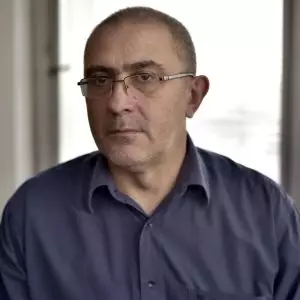
Economist and editor of the publication "Strateo" Saša Đogović recently told "Vreme" that budget reserves should not be used for any sports activities, because they are used for extraordinary circumstances such as natural disasters, and that only if there are no such circumstances the budget reserve can be used for some other, more productive purposes, such as social benefits or smaller projects.
Đogović emphasized that there is no justification for helping the FSS from budget reserves, because football is a global and commercialized game that actually makes money.
He pointed out that FSS has its own income from competitions, i.e. placement at world and European championships.
"The help that the FSS received shows that there is a general lack of knowledge in the work of the FSS and that measures of both a personnel and systemic nature are urgently needed in the way football functions in Serbia in order to ensure a system of responsibility for what was done or what was not done, but also for financial operations," said Đogović.
He assessed that it is easy to be in the position that the FSS is in because there is always a "rearrangement" in the form of the state, so regardless of the work and results, taxpayers cover all financial failures or irresponsible operations of the FSS.
"This indicates that there is a system of a partitocratic and corrupt work style in which there is no word of responsibility, and let's not even talk about morality or professionalism."