A century after they Irish nuns, members of the Bon Secours Catholic order, began burying hundreds of babies in what would become a mass, unmarked grave, archaeologists and other experts began excavating the site in the Irish town of Tuam, in County Galway.
It is believed that 5000 babies who died at the St. Mary's Mother and Baby Home between 796 and 1925 are buried on the 1961 square meter site.
The excavations, which are expected to last two years, mark a new phase in Ireland's dealing with the abuse and neglect of children in religious and state institutions, especially when it comes to children who were stigmatized as illegitimate, and such treatment of them has been called "a stain on the nation's conscience".
Burial in a septic tank
In the aforementioned home where young women and girls were sent to give birth, some babies were buried in an abandoned underground septic tank.
There were no burial records, and all of these deaths were simply ignored until a decade ago when local historian Catherine Corless discovered the death certificates for 796 babies.
This led to the establishment of a judicial commission, an apology from the state and a promise that excavations would be organized at the site.
The former home for mothers and babies was demolished in 1961 and a residential area is now located in its place.
International research team
Most of the dig site is sealed off, and the 18-strong research team includes archaeologists, anthropologists and other forensic experts from Ireland, the UK, Australia, Colombia, Spain and the US, led by Daniel McSweeney, a former envoy to the International Committee of the Red Cross.
The goal of the operation is to find all human remains and identify them, if possible, so that they can be returned to their families and buried with dignity.
McSweeney stressed that the size and location of the site, water filtration and mixing of the remains, along with the proximity of other remains from the Great Famine and poverty period in Ireland in the 19th century, made the operation very complex.

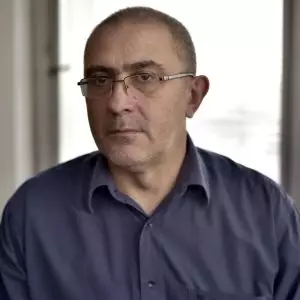
Photo: AP Photo/Peter MorrisonDaniel McSweeney
"All of this together really adds to the challenge. This is a forensic-standard search, like a police investigation. Our team includes people who are experts in crime scene management. We are required by law to call a pathologist or the police if we find evidence of unnatural death," McSweeney said.
He emphasized that the excavator has a special bucket without teeth, that it will work slowly and stop whenever the archaeologists see something interesting.
The research team has a laboratory at the dig site that can do preliminary analysis before sending the material to a larger laboratory, and some relatives of the deceased children have provided DNA samples.
With the approval of the state
The Bon Secour nuns ran their institution with the approval of the Irish state, which ignored poverty, misogyny and high infant mortality rates.
The home in Tuam closed in 1961 and was demolished and a housing estate built on it.
In 1975, two boys, looking for apples, came across human bones in an abandoned septic tank. The authorities did not take any measures, and they just buried the pit again.
At the time, many believed that it was the remains of the Great Famine in Ireland, because before the home there was an institution for the poor and homeless where they worked in exchange for accommodation and food.
Research by Catherine Corless
That was until Katherine Corless, a former textile factory worker, became interested in local history, and in 2014 she published research that was picked up by local, then national and international media.
Corless knew that the victims of the famine were buried in a marked plot not far from where the human remains were found. When she compared old maps, she saw that the area was marked as a "septic tank," and on one map from the 1970s, someone had handwritten "cemetery."
Corles asked the municipal authorities for a list of all the children who died in the home. She expected twenty names, but a list with almost 800 names arrived. She then searched all known cemeteries in County Galway and neighboring County Mayo, but found no graves. She concluded that the remains of all those children were most likely buried in the septic tank.
When the story broke in the world media in 2014, many people in Tuam were skeptical. Nevertheless, a witness came forward, Mary Moriarty, who lived next to the place where the home was in the XNUMXs.
She recalled that the children found a skull on a stick. When she went to check it, she fell into the hole and saw "small bundles, stacked one on top of the other" and wrapped in cloths that had turned black from the moisture. When asked how many there were, she answered - "hundreds".
In 2017, the Government of Ireland confirmed the findings of Catherine Corless. The trial exhumation found "a considerable amount of human remains", from babies who died before or during childbirth to children as young as three. It had nothing to do with the Great Hunger - these were the bodies of children from the home.
"Chamber of Terror"
According to official data, the first child to die was Patrick Deren in 1925, and the last was Mary Carty in 1960. In those 35 years, another 794 children died, and former Irish Prime Minister Enda Kenny described the place as a "chamber of horrors".
PJ Haverty, who spent the first six years of his life in the home, says he saw it as a prison. He stated that they were separated from other children at school and that children from the home had to come 10 minutes later and leave earlier so that the other students would not talk to them.
"We were dirt off the streets," Haverty described.
That stigma followed him even after he found a family to take him in, and later came into contact with his biological mother.