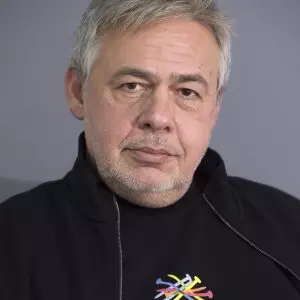
The reason for the interview with the world-renowned and multiple award-winning Czech architect Stanislav Fiala (1962, Most, Czech Republic) is the recently presented urban and architectural project "Marina Dorćol" in Belgrade, from the studio "Kuzmanović + Fiala", as well as his other realized projects in In the Czech Republic, Belgrade, as well as throughout Europe, they are easily recognizable by their unique architecture, fitting into the environment and attitude towards materials and details. Fiala's architectural and artistic sensibility and sincere and instinctive attitude towards every design task correspond to the humane values and qualities of architecture and the built environment. Seeking a poetics of space that is in harmony with place, heritage and nature, Fiala remains consistent in anticipating the essential and fully engaged in the process of realizing his buildings to the desired result.
In the traditional friendship between Serbia and the Czech Republic, Serbian-Czech architectural relations stand out, dating back to the middle of the 1812th century, when the architect Jan Nevole (1903–XNUMX) came from Prague to Belgrade, who got a position in the state construction service, where he was the first began to use the name "architect". In the center of Belgrade, he built Captain Misha's building, which today is a cultural monument of exceptional importance. Since then, several Czech architects have left significant traces in the Belgrade area, especially between the two world wars, while Serbian architects and artists went to study and improve at prestigious Prague art schools or started their careers in Czech studios, such as the architect Nikola Dobrović, the leader Serbian architectural modernism.
For the company "Sebre" a few years ago you realized a residential building in Belgrade - Pushkin's residence (2017) on Senjak, and then you are in 2021. completed a significantly larger project for a new settlement "Marina Dorcol", which represents the reurbanization of the former industrial area along the Danube. The project includes an urban solution with the arrangement of green and recreational areas, as well as the construction of fifteen fewer storey residential and commercial buildings. It is interesting that the first phase of project implementation, which includes the construction of six buildings with 200 apartments, there are only a little more apartments than an average building in the Belgrade waterfront complex. Instead of density, in construction, you gave priority to green areas and urban comfort. How did you experience Belgrade?? What would you highlight as its urban values and potentials? What makes Belgrade different from other cities where you have built?
STANISLAV FIALA: Belgrade has the great privilege of lying on two beautiful, large rivers, at the confluence of the Sava and the Danube. Not every city through which a river flows can take advantage of this obvious quality, but people in Belgrade obviously use it brilliantly. I perceive Belgrade as a living space of people who are open and friendly, similar to people in southern countries, illuminated by the hot sun. Belgraders know how to beautifully fill their city with real, joyful life, and I see that as a huge advantage for anyone who comes here as a guest and tries to get to know local customs, and tries, with modesty and respect, to introduce some new parts into the mosaic of space.
For me, Belgrade is still an unknown space that I have been exploring slowly, for many years, as someone who is constantly in the role of a visitor, but who feels the logical kinship of the Slavic language and thought. This encourages me in my attempts to understand the citizens of Belgrade and gives me hope that I can offer them something that will work in this city. That's exactly why I easily connected with the talented Belgrade architect Jelena Kuzmanović, who has created a team of great collaborators around her, with whom we create a kind of "production plant", in which everything must be created.
In addition to the Slavic closeness, I also have the experience that everywhere in the world, even in quite different contexts, the same rules of common sense apply. And when a person does not renounce those rules and does not disturb the natural balance of the space, the result never disappoints.
You graduated from the Faculty of Architecture of the Czech Technical University in Prague. What memories do you have of studying architecture and the period of the first half of the 1980s? Who was your role model then and what all influenced the shaping of your approach in architecture?
The period of study for most of us is a period of maturation and intensive adoption of everything new. It is a time that we remember fondly, sometimes uncritically, for the rest of our lives. But it was also a phase of natural resistance, of defining ourselves in relation to what we are surrounded by and of great admiration for what is far from us and which we know only through the veil of secrecy of something inaccessible and hidden behind the "iron curtain" of that time. I was very attracted to Japanese modern architecture then, and I can't say that even now, in my mature years, I have completely freed myself from that admiration. Maybe I've just replaced it with the pleasure I feel in occasional encounters with something so smart, moderate, and human-sized. We find such construction projects all around us, and these encounters leave traces in us forever. I can't say that I was a completely studious, bookish type, focused on collecting large amounts of data. For me, a safer creative space has always been where one thinks more freely, without the heavy burden of accumulated knowledge. I think that I am most shaped by the memories of my childhood spent in the forest, observing everything around me, and in fact I am still most fascinated by the unattainable flawlessness of nature and our mother Earth, which sails through space in perfect laws, which we have never been able to fully understand rationally.
How do you rate the current global architectural scene?? How much has changed in architecture since your first projects? If changes and news affect your work and approach, to what extent it happens?
Changes come so slowly and unobtrusively that, looking at my old houses, I don't notice any significant change in their basic philosophy. I feel that my main compositional themes have remained the same, as has the user of the buildings I design. It can be noticed that in the recent period I allow myself to experiment more and I have quite abandoned the safety of the rectangular base. The possibility of such work came naturally, thanks to much greater certainty in the estimations of the construction process and other related parameters. The main reason for this change towards more organic and freer forms is the intensive experience gained in working on the houses realized so far, in which this freedom made it possible to solve very complex spaces. In this desire to constantly move towards something new, the observers of what I do, and especially the clients, supported me.
When you ask about current global architecture, I don't consider myself an expert on it. I'm pretty much a blank slate in that. I perceive it only peripherally, and it seems to me that the time has come to start distinguishing between "construction" and "architecture". I think that the trajectories of these concepts in mass world production diverge quite a bit. The construction of many buildings that define our new cities is completely dictated by an inexhaustible set of rules and norms, which simply must not be doubted. And without a doubt, there is no real understanding of the problem and quality progress. I think that architecture is completely dependent on doubt and knowledge, and only from the mystery of the meeting of these two forces can a new, more progressive solution emerge.
You had the opportunity to get acquainted with the current Serbian architecture. What are your impressions?
I get to know myself in my own way, which does not come from systematic study, but is a consequence of natural encounters with what fate puts in my way. I have already met a number of Serbian architects, and those whom I had the opportunity to get to know well - I love them. Their works, which they showed me in photographs, seemed clever to me. I like some of the houses I look at from the outside. Others do not, but it is the same in every country. Anywhere in the world you have to travel miles and miles between two places that will give you a valuable architectural experience. It is rare where there is a large concentration of good works in a smaller area. They say you can experience it in Japan, but I haven't been there.
I like solutions that surprise the mind, moderation and spirit. I get disappointed by things that seem artificial and schematic. In your country, the ratio of good and bad results is roughly balanced. In addition, I am always very reluctant to judge the work of fellow architects because I know very well that what we see on the street is influenced by so many factors that it is difficult to imagine. The blame, and sometimes perhaps the glory, usually falls on the head of the author-architect. However, an architect is not a sculptor and when he finds himself in a complex mechanism of different influences and opinions, he can be easily overwhelmed. I'm sure that almost everyone tries to leave a beautiful work behind and that authors go into the work with all their might, so I think that light criticism is usually not fair.
Today, there is a lot of talk and debate in the world about the challenges of urban development, sustainability and resilience of cities, on migration and the wave of renewal. The New European Bauhaus initiative was launched at the level of the European Union, which is based on several strategic documents, charter and declaration. What role should architects play in such processes?? How can an architect contribute to social and economic development?
It is a very broad topic, which, in a short conversation, we have no chance to dive into sufficiently. Also, I am not one of those people who is fascinated by global principles and theories. I belong to those who believe that we must first of all take care of our immediate environment, and only then possibly develop theories about major global problems. Figuratively speaking, when the smallest cells of the organism are in order, then a healthy whole can be assembled from them, so I focus nicely on those smallest parts of the whole organism, because I feel that it makes me satisfied. It's something I can personally influence and I consider that a core value.
People have always had a natural ability to take care of themselves and their loved ones, their neighbors, sometimes even the wider community. Usually, adversity taught them how to solve what worries them "here and now". They learned step by step and copied well from each other. Today, they are losing this ability under the influence of global civilization. I don't know, but I have an unpleasant feeling that it is being replaced by orders, commandments and prohibitions. Therefore, I see the recipe in the fact that people return to their roots and do not lose contact with them, even though today the dominant impression is that we have to solve problems of a different scale. Fair, small steps, to work on what we agree with our closest neighbors. Instincts tell me that global large-format theories are not a recipe. They are a field that easily allows the influence of all kinds of ideologies, and I belong to a generation where such a well-intentioned theory-ideology interfered too much in life. A wide field of theories, offering "good", almost always creates perfect conditions for mistakes. And such mistakes are usually not small.
Your buildings are recognizable by elaborate details and the use of different materials in their natural form (drvo, concrete, stone, corten steel), but also by being integrated into the environment, especially in the case of natural surroundings (for example, golf court "The devil's burden", Alena Lhota, Czech Republic). You also built in the center of Prague, whose historic core is under UNESCO protection-a (DRN building and Špork Palace). How do you perceive the process of realizing your projects? To what extent it can affect their size - proportions and theme of renovation/integration with old buildings?
A building can only be "beautiful" if it treats its surroundings with respect. It does not always have to directly adapt if the environment is not very enchanting, but with its free expression it can change the synergistic effect of that place.
The context of a place always affects me fundamentally and I try to observe it long and carefully. Sometimes in the eyes of investors it can even look like endless tapping in the place since nothing appears on paper in that part of the process, but it doesn't bother me anymore because I know that the solution will always come when it should and that it is necessary to respect the natural process of maturation ideas.
This opens the way for me to an imaginary picture, in which the scale, size, connection with the environment, ways of using existing materials and other important things are almost clearly determined. The organism of the house that I will continue to create is slowly being put together, the ideas that I will show to the investor and a wide team of collaborators are developing.
I choose the materials I use carefully, according to their longevity, quality maturation or, if you will, aging. Those criteria are best met by traditional building materials. Those created by nature, not man. They are still, in the broad spectrum of our civilization, unsurpassed. They age well and are long-lasting if you carefully consider their future use. Materials determine the lifespan of a building and form the basis of its ecology, economy, in fact, its overall quality.
Although the details are not what interests me the most in construction, I process them carefully because I deeply feel that they hide much more than our accelerated civilization appreciates. They make me happy during creation and that, I hope, will be reflected in the final perception of the finished object. But it is only one of the many areas that ultimately give the building its charisma.
You design for different environments and contexts. What quality of architecture do you strive for in your projects?? How do you see your facilities in the context of the city?/areas?
I design the building systematically, in order, from the investor's task, the function, through the concept, placing it in the context of the location, to the details, which are just the icing on the cake.
For me, the basic function is the primary condition of success, it clearly determines the good or bad fate of the building. Its future is primarily defined by how useful it will be to those who live or work there, and even how it will be experienced by passers-by and observers.
When a building treats its surroundings with care, if it is useful and functional, if it enriches the environment with spirit, freshness and beauty, then it makes the whole space recognizable and friendly. That's what we always strive for. This is the basic principle of our team's work.
Do you visit your facilities even after construction?? Are you interested in the user's attitude towards spatial and design solutions??
Yes, whenever possible, I stay with the completed objects as long as possible and try, within the scope of the possibility, to adapt them to the needs by observing the experience of living in them. I visit my old buildings, I am in friendly communication with their users and absorb their experiences. I am glad that I became friends with all the previous clients and that we are still in contact. When they need professional help, they turn to me first, and that's a sign for me that I haven't disappointed them.
User feedback is an important basis for future concepts to me. Often, clients point me in an unexpected direction, point out a detail they liked in the previous building, for example, a greater use of rounded, organic shapes. When I feel that such a change of direction can be carried out without significant losses, then I am happy to oblige.
How would you briefly introduce the project? "Marina Dorcol"- what were the starting points and concepts for the construction and arrangement of this coastal city zone, inside which there is also an object of the industrial heritage of Belgrade - Thermal power plant "Power and light" from 1930. years?
I came to the place for the first time in 2018 and was immediately captivated by its atmosphere, the tense mystery of a decaying historical building in pure Bauhaus style, a rusty crane hanging over a muddy bay, a crane that used to unload coal ships. That connection with the river and the void that surrounds the site was etched in my memory, and when years later we got the opportunity to create a completely new part of the city, there was no doubt that our new urban complex would focus primarily on that, adhering to urban planning principles , naturally embraces the original harbor bay and transforms it into a picturesque central square. It was clear that everything would be built on the contrast of the composition of freely shaped houses, surrounded by greenery and the precious historical heritage of the strict architecture of the thirties.
We cannot predict what will eventually happen to the rest of this industrial gem, because that building does not belong to us, but by including it in the urban plan, as a place where our gaze is directed, we tried to indicate its future and importance. We direct one of the main urban planning axes that cut through our complex towards its magnificent facade, and turn the old iron crane into a significant "artistic" artifact. It will float high above our new green park. Maybe one day we will have a chance to build a lookout tower on it. On one side of the bay, the park almost plunges into the water, and on the other it emerges again, continuing along the green path, directed towards the original coastal park along the Danube.
We will clean and transform the former marina bay beyond recognition. We line its shore with a spacious river promenade on two levels. The lower level will provide direct contact with the water, usable for recreation and sports. The upper level will connect with the street network and build a kind of square around the water, and together with the active ground part, cover almost the entire coast of the bay.
The axis of our "Marina" and the central area of "Rečno trg" is directed towards the new linear park. There, in the passage between the buildings, we will create a kind of imaginary "portal to Marin". This new green artery should become the main connection with the center of Belgrade.
We designed the buildings according to the principles that we have been applying in practice for years. They are covered with natural greenery, arranged along continuous balconies. Each apartment thus has its own "garden" with a beautiful view. All the roofs on the buildings form functional grassy green areas, naturally shaded by medium-tall trees. The shapes and positions of the houses are carefully coordinated with the course of the Danube, so that they offer an ideal view not only of the river and its mouth, but also of the center of Belgrade.
You are the winner of several architectural awards and recognitions - your realization since 2000. were nominated twice for the prestigious European Union Prize for Contemporary Architecture - Award "Mies van der Rohe", they received awards for "building of the year" i "the building of the decade", DRN building in 2019. received the Mayor's Award of the Capital City of Prague, and the Špork Palace received a special recognition from the Ministry of Culture. What do those awards and recognitions mean to you?? How they inspire and bind you from the point of view of future projects?
It is important that a person is never dependent on recognition. It might even be worse than other addictions. It is necessary to do your work primarily because of the inner feeling. When there is a feeling of a job well done, then everything is fine and it is not necessary to decorate it with awards.
Of course, recognition is always an important incentive for further work, for me and a wide team of collaborators, but we have to take it only as a bonus. Certainly, it is a joy for the investor and a welcome confirmation that his effort and energy were not wasted.
Architecture has had different supports throughout history, characteristics and influences. What gives it ontologically its fundamental value is its focus on users and society. Are there ethical problems in contemporary architecture and urbanism?? How could architecture today preserve its primary meaning in addition to the obvious economic basis within the potential of the architectural market?
Architecture has always been a reflection of the state of society as a whole, and this is true even now. That is why, in my opinion, it is important that people generally do not lose contact with the basic original principles of their existence on Earth and that they know how to be guided by them at least occasionally, equally in their personal and professional lives. Our civilization needs to abandon the rapture of continuous growth and immoderate accumulation of material values. In this way, perhaps society could be healed, and with it the image of its representative architecture. Architecture, in such circumstances, would receive and solve the right tasks, and its recovery would come exactly where it should - from the source.
Such changes can be achieved by small, gentle steps in every field of human activity, including in architecture. That's why it's important to use every opportunity to promote healthier principles. Fair consideration and research into the experiences of our ancestors is a good start. It is better to learn from history than from hysteria.
The author is an architect, research associate