Dangerous medical waste in containers, together with others garbage, and unsafe burning of body parts - until about fifteen years ago, this was quite common at health institutions in Niš and elsewhere.
Then the European Union started investing millions of euros to help Serbia finally organize this area. The Clinical Center and the Health Center in Niš were among those that received facilities for the treatment of infectious medical waste.
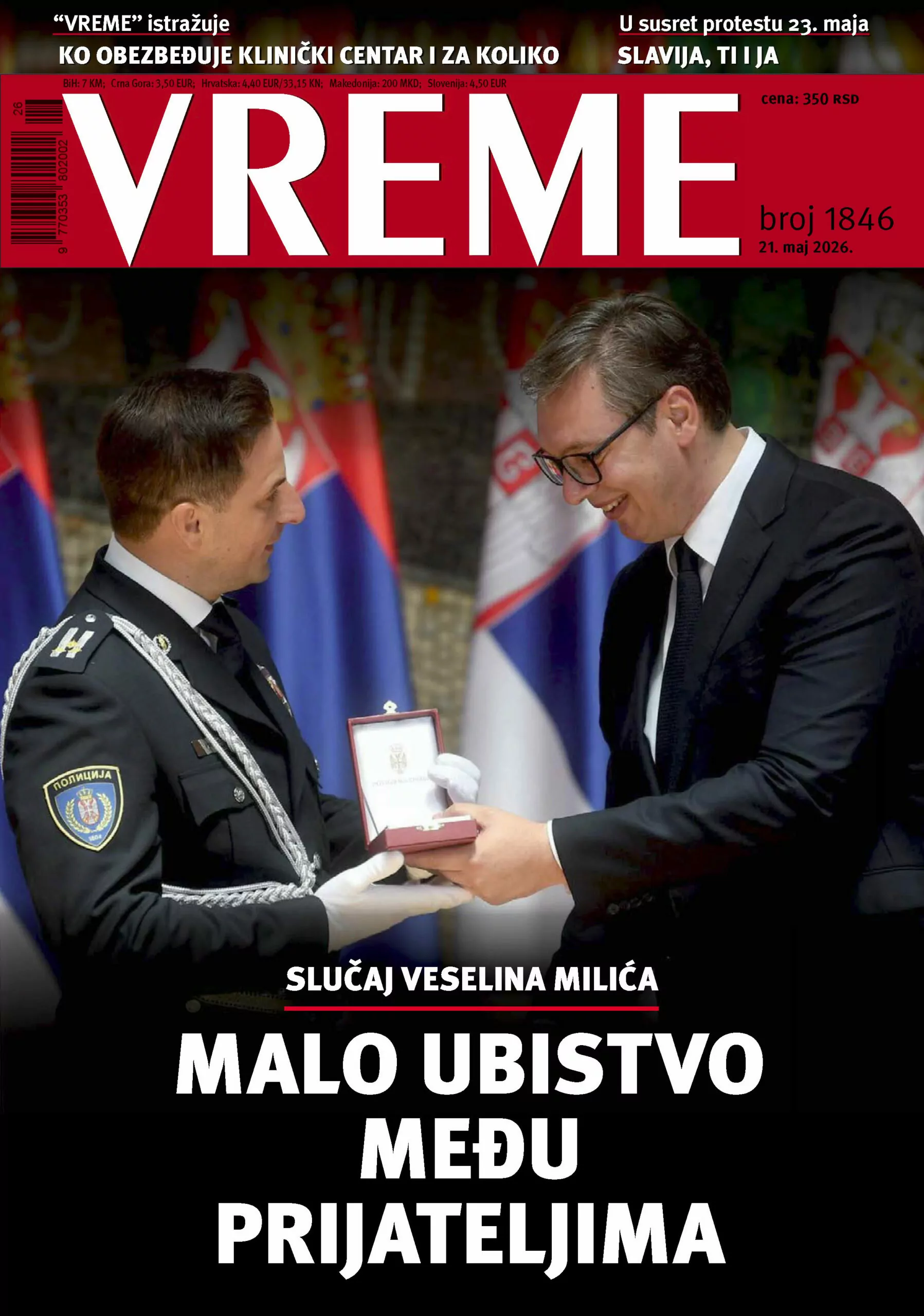
However, today those plants are almost empty, without permits. In the new issue, which is on newsstands, "Vreme" reveals a scheme according to which the government has been "clearing the field" in recent years, emptying state facilities.
Several of our interlocutors think that the reason is "filling the pockets" of the private company Remondis Madison from Zrenjanin, which now sterilizes waste and charges more for it. The company denies it.
They revoke licenses without explanation
The facility at the Niš Clinical Center has four autoclaves and three crushers, as well as one vehicle that transports waste from all clinics.
"We disposed of waste from the Emergency Department, Transfusion, Student Polyclinic, Institute of Forensic Medicine, Clinic for Dentistry, Institute of Niška Banja, Gornja Toponica and the Institute for Health Protection of Workers," they told "Vreme". State institutions did not pay anything for this service.
But the troubles started about five years ago. First, they lose their license to transport - according to the new Law on Transport of Dangerous Goods, they would have to register as a road transport company, which is practically impossible for health institutions. But it doesn't end there.
First of all, they could no longer dispose of waste from primary clinics and surgeries for a fee, and since February, they can't even dispose of waste from state ones.
"At that time, the Ministry did not extend our license," the Security Department of the Niš Clinical Center states. "There is no explanation, it just says that we have been granted permission for our own use only."
Private individuals earn more and more
One of the interlocutors says that this is an example that illustrates the situation at the level of the whole of Serbia, because he claims that "everyone lost their licenses because of one". He is referring to the company Remondis from Zrenjanin.
It is difficult to find exact data on earnings, but "Vreme" received a confirmation from the health center of Aleksinac that they paid about three million dinars to private companies for the disposal of medical waste last year and this year alone. At the same time, they have their own plant that they do not use.
Remondis denies everything. "In the state of Serbia, the largest operator for the disposal of medical waste is the state system that operates under the Ministry of Health, and it is estimated that 80% of the generated medical waste is disposed of through it, while the other 20% is divided among private operators."
When asked why all other operators have lost their licenses in recent years, and Remondis takes over the work of state plants that are therefore not working at full capacity, they answer that the regulations have changed and that everyone must respect them.
Read the entire research in the new issue of "Vremena", which is on newsstands.
This October, "Vreme" celebrates and honors - as much as 35 percent discount for our 35th birthday! Valid for semi-annual and annual subscriptions. Subscribe now!