Serbian foreign policy is torn between Brussels, Moscow i Beijing, and hence the energy sector - considered by many to be crucial - often serves as a currency for trade and political adulation of power centers. Namely, the energy and mining sector in Serbia is a par excellence example of how a country tries to balance in geopolitical waters, and the division of key resources based on the geostrategic spheres of interest of the great powers.
In other words: this sector represents a microcosm of Serbia's wider foreign policy, which has been moving between East and West for years.
This strategic juggling is especially noticeable in the context of significant investments and influence of the three mentioned actors. China, through its global "Belt and Road" initiative, primarily focuses on massive infrastructure and mining projects (copper, gold, coal), seeing Serbia as an important link in its European supply and export chain. Russia, on the other hand, remains a dominant player in traditional energy sectors, primarily oil and gas, using these levers to preserve long-standing political and economic influence. The European Union, of which Serbia aspires to be a member at least declaratively, insists on harmonizing with its standards, promoting the transition to renewable energy sources and energy efficiency, with smaller but strategically focused investments.
However, such an approach, although apparently pragmatic, carries with it not only benefits, but also risks and losses for Serbia.
Russian Eldorado for oil and gas
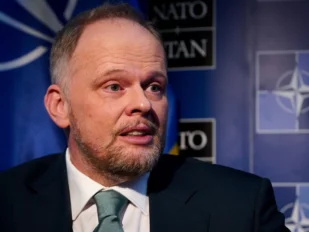
Energy policy expert Miodrag Kapor explains to "Vreme" that during the early 2000s, Serbia briefly tried to harmonize its electricity system with the EU system. Then it managed to remove the unnecessary intermediary for the import of natural gas (Jugorosgas), and become a full member of the Energy Community. However, as he says, "since 2005, Serbia has again introduced Jugorosgas, this time as a majority Russian company and intermediary for gas imports." That was one of a series of clear indicators that Serbia is on the side of Russia energetically, but also geostrategically.
The Russians made a key breakthrough in Serbia's energy sector by purchasing a majority stake in the Oil Industry of Serbia (NIS) in 2008, which Kapor assesses as "probably the most harmful international contract in the modern history of Serbia" - without a tender and far below the market price
With this move, Gazprom (Kremlin) not only achieved economic profit, but also secured a long-term strategic, political and geopolitical effect, while Serbia, when it comes to energy independence, was taken back at least three steps.
The next Russian penetration into Serbian energy was realized in 2021, with the opening of the "Balkan Stream" - a continuation of the "Turkish Stream" gas pipeline, which passes through Serbia and Bulgaria.
Serbia imports more than 90 percent of its natural gas from Russia.
At Putin's mercy
Kapor adds that according to the Constitution and the Law, Serbia has the right to nationalize the Serbian Oil Industry. However, as the only European country in which the monopoly over the oil derivatives market is held by a foreign power in a military-political conflict with the EU and the West as a whole, "Serbia left the fate of that strategic company to the interests of the Russian Federation."
Russia is an energy power that skillfully uses this sector as a means of soft power. Dependence on Russian gas or oil gives the Kremlin a powerful tool to influence political decisions, as well as an instrument to stabilize relations with Moscow. On the principle of stick and carrot, Russia can "meet" in times of crisis and offer good conditions for the sale of gas, but if necessary, "turn on the faucet" when relations fail, as it already demonstrated in Ukraine in 2006 and 2009.
By penetrating the critical national infrastructure - in this case by taking over NIS - Russia ensured itself permanent influence in Serbia.
The deal with the Russians and the sale of NIS was made in 2008, just before Kosovo's unilateral declaration of independence. At that moment, Serbia needed Russia as a strategic partner in the international community, primarily the United Nations and the Security Council. The Kremlin then gained dominant influence in the oil and gas sector and continued to support Serbia on the Kosovo issue. In parallel, new gas agreements were concluded.
Conscious rush into energy dependence on Russia
One of the negative consequences of the Russian primacy in the energy sector - the current one - are the sanctions on NIS introduced by the USA, which, according to the announcements of the government representatives, could soon come into force. Attempts to restructure and transfer Gazprom's ownership stake to other subsidiaries of the company, as well as negotiations by the Government of Serbia on both sides, did not yield results, nor were they convincing enough for the Americans.
Kapor explains that despite the widely established US and EU sanctions against Russian oil and gas companies, "Serbia did everything it could to maintain artificial dependence on Russian gas", while, as he emphasizes, NIS-Gazpromneft together with Lukoil (about 10 percent of the market in Serbia) still holds approximately 80 percent of the oil derivatives market in 2025.
He adds that we should look at other European countries that, until the beginning of the Russian aggression against Ukraine, had a similar dependence on Russian energy sources. For example, Bulgaria was 90 percent dependent on Russian gas until 2022, while today it does not import even a cubic meter.
Therefore, the question arises - does Serbia even have the intention, that is, the will, to free itself from the Russian energy burden?
A flood of Chinese projects
On the other hand, in the last few years, China has become one of Serbia's strongest partners in many sectors, including energy and mining. According to the data of the tool for monitoring Chinese investments at the global level of the American Enterprise Institute (AEI), China has so far invested almost 1.5 billion euros in Serbia in the energy sector alone.
Unlike the Kremlin, which, through the influx of Russian capital, takes over shares owned by companies in the energy sector, Beijing does it differently - through investments, but also large loans from Chinese banks with state guarantees. Considering the non-transparency of a good part of these deals, it is often unclear whether some projects were actually implemented through foreign direct investments, or whether they are loans obtained under unknown conditions.
China has so far invested the most in dirty energy and mining. Thus, in 2018, the Chinese company Ziđin became the majority owner of the RTB Bor mining basin, within which the copper and precious metal mines in Bor and Majdanpek operate (the only such in Serbia). With the influx of new capital and the assumption of the old debt of this once powerful company, the Chinese company committed itself to better operations of the mine in the future, while the Serbian state remained in possession of a 36 percent share and the fruits of the mine rent.
A large part of Chinese imports from Serbia refers precisely to raw materials obtained from the exploitation of mines.
At the end of last year, Block B3 of the coal-fired thermal power plant "Kostolac" was put into trial operation, which the authorities called "the biggest energy project". The contractor is the Chinese company CMEC, and Serbia, according to RSE, will repay this loan over ten years.
Increasing the capacity of "dirty" energy
Currently, about 70 percent of electricity in Serbia comes from coal-fired thermal power plants. The problem with such a megalomaniacal project is the fact that the capacities of "dirty" energy are increasing in parallel with the decarbonization process implemented by the European Union, which will directly affect Serbia through the adoption of CBAM fees. Regarding China - that is, its control over the mines in Eastern Serbia, the Smederevo Iron and Steel Plant, as well as the financing of the Kostolac B3 thermal power plant, Miodrag Kapor assesses that it has the status of a "state within a state" in certain elements.
The application of CBAM starts in 2026, while the transition phase has been ongoing for two years. By the way, the goal of the EU is to completely stop the production of "dirty" electricity by the end of 2050. Therefore, for Serbia, which is officially still on the European path, the question of the justification of this investment arises.
Finally, the government in Belgrade uses Chinese investments for economic legitimization on the internal level.
The government reaps the benefits from all three sides. At the same time, he is balancing, trying to fulfill the expectations of the trio. When relations with the West cool down, new opportunities for the influx of capital from the East open up, and when the East becomes too inconvenient, the solution is found in the West.
European story
At the beginning of the 2000s, in parallel with the turning of official Belgrade to the European path, investments, grants and EU loans began to arrive in the energy sector.
The European Union and its leading countries in the Serbian energy sector invest the most in renewable energy sources - in accordance with the European Green Agreement. This document envisages reducing greenhouse gas emissions to net zero by 2050, with a transitional reduction of 55 percent by 2030 (compared to 1990 levels), increasing the share of renewable energy sources, promoting a circular economy, and other green transition measures.
According to the data of the official page "EU for you", Serbia has so far received over one billion euros for the energy sector through various grants. In the current year, the EU signed an agreement with Serbia worth about 325 million euros, of which 240 million euros are grants for projects in the field of energy and environmental protection, while within the WBIF program - which brings together the EU, EIB, EBRD and national funds - about 1,1 billion euros have been distributed until 2025 in the form of investment grants for infrastructure including energy, gas interconnectors, renewable sources and energy efficiency.
In addition to investing in renewable energy sources, such as wind and solar parks, as well as hydropower plants, the EU and its members allocate significant funds for strengthening energy efficiency measures, environmental improvements and more efficient exploitation, as well as reducing emissions in plants.
Unlike Russian and Chinese investments that are more focused on fewer major projects, EU-related investments, loans and grants are diversified and cover a wider range of projects.
Alignment with the EU's strategic opponents
European projects have been around for the longest time, but Chinese and Russian ones serve as a counterweight. Russian sentiment in public opinion is at its peak, while European sentiment has been in free fall for years - therefore, Russian influence in the energy sector represents not only ensuring Russian support on the issue of Kosovo, but also strengthening "fraternal" relations with Moscow.
Giving concessions to Russia and China, as well as concluding unfavorable contracts in the energy sector, Miodrag Kapor sees as classifying Serbia with the EU's strategic opponents - "primarily Russia", and then, "to a certain extent, the People's Republic of China", taking into account, as he says, "the geopolitical fact and limitations arising from the fact that Serbia is surrounded by NATO and EU member states".
Diversification of partners reduces absolute dependence on one source and enables Serbia to negotiate from a position of greater autonomy.
However, attempts at geopolitical balancing lead to pressures from multiple sides, where each actor expects loyalty or at least alignment with their interests. Dependence on loans can burden the country's public debt in the long term, while the non-compliance of standards - especially environmental ones - with the EU can slow down the process of European integration.
A silent problem
In 2019, the EU committed with the European Green Deal that by 2050 the net carbon emissions associated with the use of resources will be zero. Exporters of products covered by CBAM will have to pay to the budget of the importing country the difference between the emission price in the EU ETS (emissions trading system in force since 2005 in the EU) and the emission price in the country from which the goods originate.
In other words, when importing goods to the EU market, companies will be forced to buy CBAM certificates, the price of which will correspond to the price of carbon dioxide emissions that would have been paid if the goods had been produced within the Union.
Although decarbonization is a process that is already widely implemented through various measures, CBAM is the first mechanism that includes an economic, i.e. trade, component.
Looking at the countries, the largest importer of goods from Serbia is Germany. Serbia exports to the EU a lot of industrial raw materials produced with the emission of large amounts of carbon dioxide. Therefore, as a consequence, CBAM tariffs may lead to an increase in costs for exporters from Serbia, less competitiveness of Serbian products and ultimately the risk of a decrease in exports to the EU.
According to data from the Energy Community, Kapor adds, the countries of the Western Balkans have avoided costs of around 3,9 billion euros due to the absence of CO₂ taxes on electricity production in 2023.
"More than half of that amount refers to Serbia," says our interlocutor. CBAM switches from the reporting (2023-2025) to the fiscal regime from January 1, 2026 and includes "imports of steel, cement, fertilizers, aluminum, electricity and hydrogen", which, he says, will have a direct impact on Serbian steel, cement and aluminum, and indirectly on the price of electricity and CO₂. Without accelerated investments in RES and energy efficiency, Serbian exporters will pay ever higher CBAM levies, reducing their own competitiveness.
However, CBAM - except in the profession - has never been a very common topic in the Serbian public.
The path of the green transition is the path to the EU. The path that does not lead to a green transition leads to another geopolitical context - to China and Russia, concludes Kapor.
Edited by: Jelena Jorgacevic