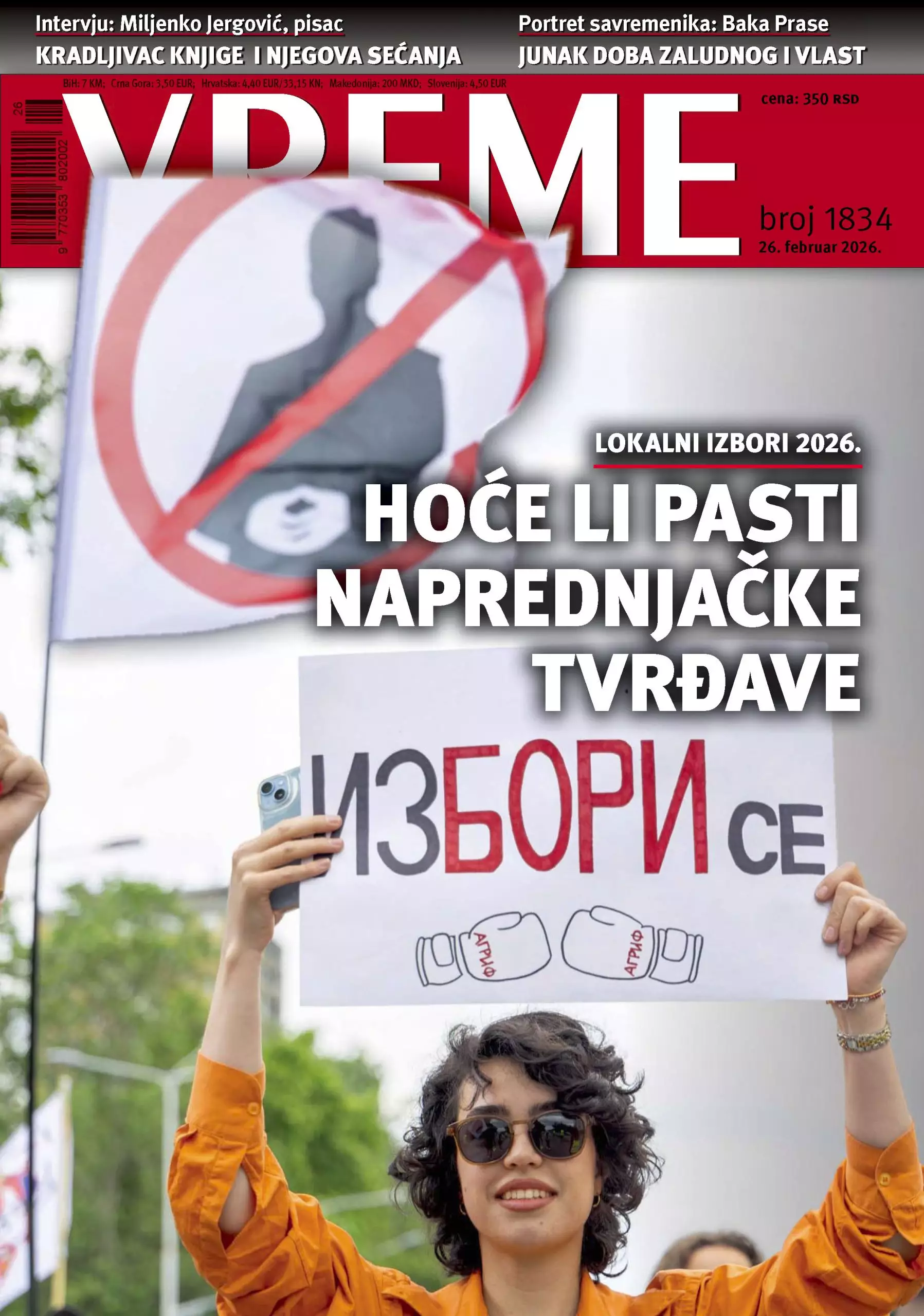
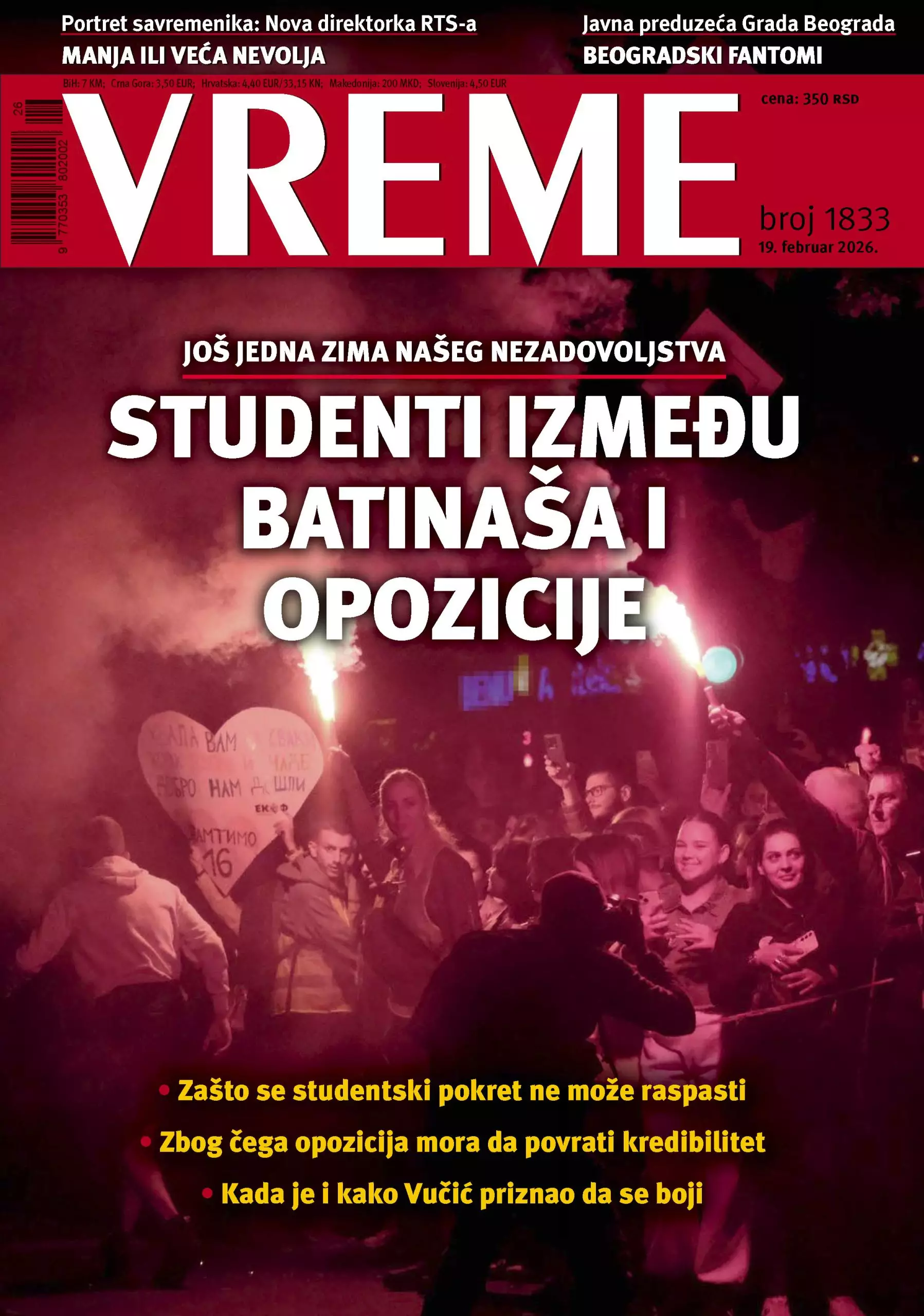
Germany parliamentary parties are currently busy campaigning for early elections to the Bundestag on February 23. Nevertheless, all parliamentary groups found time to express their opinions to DW about the months-long issue protests in Serbia, which, according to many, could change the political everyday life in that country, a candidate for membership in the European Union, writes Deutsche says.
CDU: "Less China, more European Union"
The representative of the Christian Democrats (CDU/CSU) parliamentary group in the Bundestag Foreign Policy Committee, Jürgen Hart, in a statement delivered to DW, assessed that the accident in Novi Sad and the protests that followed are a clear sign that Serbia must change something in its foreign policy orientation.
"In the past, Serbia relied too much on Chinese money and theirs technical know-how, and that is being celebrated now. The collapse of the new station in Novi Sad, which is part of the Chinese New Silk Road project, falls on the Serbian government. Misconduct and corruption were more than obvious," believes the representative of the Christian Democrats, the force that will probably form a new government in Germany after the elections.
Hart, who, like the rest of his party, advocates for a closer connection between the Western Balkans and the European Union, sends a clear message to the authorities in Belgrade: "Serbian authorities should listen to the protesters: less China, more European Union." The future of Serbia is in the EU. This must also be reflected in the actions of the elite in Serbia," concluded the Christian Democrat politician.
Conversations between Peter Bayer and Siniša Mali
The CDU/CSU parliamentary group's long-time rapporteur for the Western Balkans and a good connoisseur of the situation in the region, Peter Bayer is a little less specific than his party colleague Hart.
"We are monitoring the situation very intensively." Of course, the topics that prevail in the election campaign in Germany push other topics into the background, but we would be very stupid if we did not follow what is happening in our neighborhood. "Yesterday in Berlin, on the sidelines of the CDU party convention, I spoke with the Minister of Finance of Serbia, Sinisa Mali, about the protests, among other things, and I asked him what the situation was in the country, how things would go on," Bayer said.
He pointed out that stability and democracy in Serbia are also important for Germany, but also that the right to protest is a basic democratic right. "I also reminded that citizens should be given a say." Of course, no violent excesses must occur. I called for, together with the citizens, to try to find an answer on how to strengthen democracy in the country and how to achieve stability," Bayer told DW on the sidelines of a CDU pre-election rally in Bonn.
SPD: "Vučić's system on the verge of implosion"
Josip Juratović, the long-time rapporteur of the Social Democratic (SPD) parliamentary group for the Western Balkans, believes that the protests that have been taking place in Serbia for weeks are different in their structure and organization than all the previous ones, and that is why, he says, the days of Aleksandar Vučić's rule are counting.
"What I have been saying all the time is happening right now, which is that Vučić's regime will implode. He is fighting against angry bees and he can't win that battle anymore. There is no political opponent by name whom he could beat in his media", predicts Juratović, who has not spared criticism of the authorities in Belgrade in his statements so far.
"Nothing is helping him anymore, neither external nor internal political allies, nor his famous acting on world and domestic stages," Juratović told DW.
For that social democratic politician, who after decades spent on the benches of the Bundestag will not run in the elections on February 23, the movement in Belgrade is still special in some ways.
"While the whole world gives in to autocrats, the students of the Balkans have found a way to get rid of their own." Vučić cannot win that battle", says the social democratic politician and expresses the hope that the countries of the Western Balkans will "finally get rid of the political mafia".
Greens: "Solidarity with the citizens of Serbia who seek justice"
The reporter for the Western Balkans of the Greens in the Bundestag, Boris Mijatović, when asked about the position regarding the protests in Serbia, first of all condemns the violence against the demonstrators and attempts at intimidation.
"Reports of gangs of thugs beating protesters to the point of hospitalization are deeply disturbing. The right to assembly and freedom of expression are the cornerstones of any democratic society. Serbia, as a candidate country for joining the EU, has the task of guaranteeing these freedoms to its citizens in order to maintain its credibility as a partner of the European Union," recalls Mijatović, who during his mandate visited the region very often, and was also an observer at the last elections in Serbia.
Referring to the tragedy in Novi Sad, Mijatović indicates that "the people of Serbia have the right to know how that tragic accident happened and who is responsible for it." "My party expressed solidarity with the citizens of Serbia who are demanding justice for the victims and the trial of those responsible," Mijatović told DW.
FDP: "Strategic partnership no longer makes sense"
Representative of the Liberals (FDP) Thomas Hacker is harsher. He believes that now Germany should finally change its favorable attitude towards official Belgrade.
"Given the protests that have been going on for weeks in Belgrade and other cities, it is very difficult to justify the agreement on the continuation of the institutional partnership between Germany and Serbia." That agreement sends the wrong message. A false impression is created that Germany still sticks to its realistic policy towards Serbia. At the same time, Serbia should now be pressured to give up its support for Russia and to face the events in Novi Sad in a transparent and comprehensive manner. Young people in the country have rightly been demonstrating for months against corruption and the lack of democracy," said the statement of the rapporteur of the FDP parliamentary group for the Western Balkans, Thomas Hacker.
AfD: "Germany should not interfere"
The representative of the Alternative for Germany (AfD) in the Foreign Policy Committee of the Bundestag and the spokesperson of that party's parliamentary group for development policy issues, Markus Frohnmeier, has a different opinion on this matter, as often when it comes to foreign policy, from the other parties in the German parliament.
"Germany should not interfere in the internal affairs of Serbia." This also includes that political and so-called civil society actors from abroad do not violate Serbia's sovereignty by intrusive interference," concludes Frohnmeier. It should also be noted that the AfD is the only parliamentary party that opposes the expansion of the European Union, including Serbia's membership.
The Left: "European, Global Struggle"
Krunoslav Stojaković, on behalf of the Left party, provided support for students in Serbia.
"The left, of course, sympathizes with the student protests in Serbia, as it has already followed the protests against the exploitation of lithium in solidarity and with support. The fight against authoritarianism and the defense of democratic structures and minimum standards is a European, global fight," says Stojakovic from the Roza Luxemburg foundation, which is close to the Left party.
He connected the current protests in Germany against the cooperation of the Christian Democrats and the right-wing Alternative for Germany (AfD) with the protests in Serbia. "In Serbia, as demonstrated by the students, as well as in Germany, where in recent days we have witnessed a broad civil society movement that took to the streets against the turn to the right and related authoritarian tendencies," concluded Stojaković.
Source: Deutsche Welle