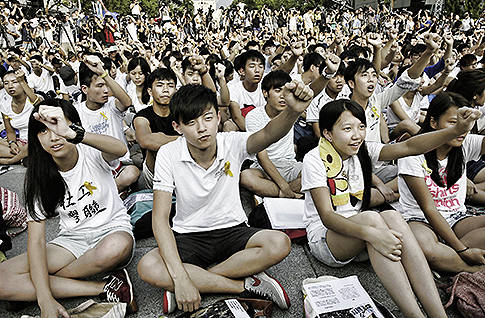
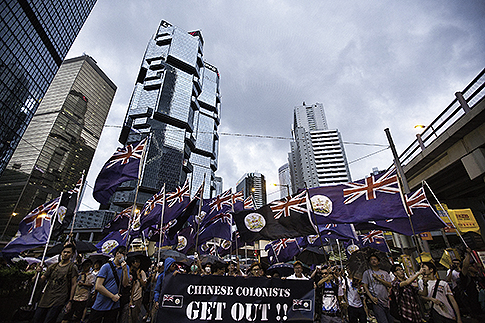
Tens of thousands of protesters occupied the main streets and squares in Hong Kong in recent days, threatening to break into the most important administrative buildings. What began as a student revolt against Beijing's decision on how to elect Hong Kong's governor could turn into the biggest political crisis on the Beijing-Hong Kong border since the territory was returned to Chinese rule (1997) and China's most serious political challenge in 25 years. . Mostly students and pupils, joined by a considerable number of members of the middle class, demand greater democratic rights, the most important of which is the free election of the leaders of this autonomous region of the People's Republic of China. Protesters are not satisfied with the decision of the government in Beijing from August 31 this year, which limits the freedom to run for the position of the first person of HK, so far elected by a special collegium (see box Electoral system in Hong Kong).
The protests in Hong Kong, which began on September 22, surprised only those who have not followed the rising tensions between Hong Kong and Beijing in recent months. In anticipation of the Chinese government's decision already at the end of June, an activist group Occupy Central held an unofficial referendum among the residents of this city, where the majority voted for the free and immediate election of the chief administrator of HK. Demonstrators took to the streets in July as well as at the end of August, just before Beijing's decision was made, all with the aim of putting pressure on the central Chinese government in the direction of free and democratic elections.
YOUNG AND COLORFUL: At first glance, it is a spontaneous protest, which has no leader and which was organized by very young people, among whom stand out only adult students. One of the spokespersons of the protest, especially in the focus of the media in the previous days, is Joshua Wong (1996), the leader of the movement Scholarism, formerly known as a fierce opponent of the government in Beijing, and whom the Chinese authorities labeled as a threat to the internal order of the People's Republic of China. In addition to Wong's movement, there are those already mentioned Occupy Central, formed on the model of similar "occupy-movements" that we have seen in previous years in the West, as well as a whole series of other student organizations.
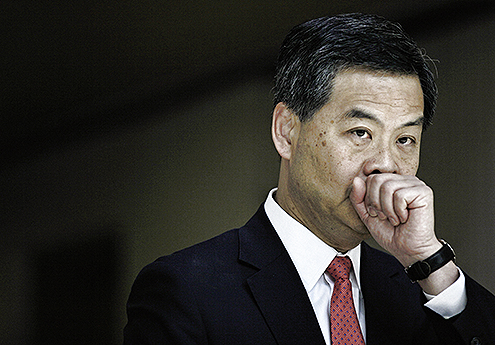
It is obvious, therefore, that we are talking about protests that are heterogeneous in their structure, but whose strength lies precisely in their dispersiveness, which makes it impossible for the central government to act in a targeted manner (eg by arresting leaders). On the other hand, precisely in the disunity of the movement lies the danger of the impossibility of reaching an agreement on a possible compromise offered by the central government, but also of a spontaneous shutdown when fatigue sets in after several weeks of active protest. As is usually the case with this type of rebellion, the demands began to multiply, so now the resignation of the current leader HK Leung Chun Ying, the opening of direct negotiations between the government representatives and the protesters, etc. are also being demanded.
A particularly significant moment in igniting the protests was the intervention of the police, who last week tried to disperse the gathered students by using tear gas, which is still far from the police brutality we saw when suppressing similar movements in the USA three years ago, but this was also enough to the protests doubled in the following days. Images of young people peacefully sitting and protesting with umbrellas (some have already labeled the events as the "Chinese Autumn" and the "Umbrella Revolution") soon replaced images of clashes between pro-democracy and central government loyalist forces, who tried to dismantle the tents and disperse the crowd. demonstrators.
The leader of the movement Occupy Central, Benny Tai, accused the police of not doing anything to protect the peaceful protesters, thereby further narrowing the space for dialogue between the conflicting parties. That the situation in HK is not simple is also shown by the data on a kind of generation gap among the residents of this city - research by the Chinese University in HK shows that 75 percent of young people between the ages of 15-24 oppose the decision of the Chinese government, while that percentage drops below 50 percent when we talk about people aged between 40-59 years. Young people born in the XNUMXs demand the introduction of Western-style democracy, while older people, more satisfied with the current status of Hong Kong, but also with China's progress in recent decades, accept the status quo. Pro-democracy movements like Occupy Central supports one percent of those younger than 24, while that percentage is only 21 percent among those between 40-59.

THE STRUGGLE FOR FREE ELECTIONS: Student protests in Hong Kong
CRITICISM OF WASHINGTON AND LONDON: The attitude of the Chinese leadership towards the protests is expected. Although the government itself did not make an official announcement, which is part of Beijing's practice, leading party newspapers accused the protesters of causing chaos and disorder and told them to pick up their umbrellas and go home. Also, the support for the current manager Leung Chun Ying was repeated several times, which does not necessarily mean that in the end Beijing will not give in and accept Leung's resignation and thus make a concession to the protesters. The support of the official media does not mean that the Chinese leadership does not hold Leung responsible for the excessive use of force against the protesters, which led to the further spread of the protests, but only that the central government is trying to play for maximum gain.
The great international publicity that the protests have received is also all the more reason for the Chinese government to end them as quickly and painlessly as possible. Great Britain, which feels called to intervene in every problem concerning its former colony, did not miss the opportunity to make a statement.
Immediately after the demonstrations broke out, Deputy Prime Minister Nick Clegg summoned the Chinese ambassador to London to convey the British government's concerns "about the refusal of the Chinese authorities to allow free elections to be held in Hong Kong." He also underlined the British government's "astonishment and dismay" at " denying what HK citizens are entitled to, which is free, fair elections based on universal suffrage."
Even Washington, the proverbial critic of China's internal politics, did not miss the opportunity. So the White House last week issued a statement in which it supports the pro-democracy aspirations of the Hong Kong people as justified. "The United States supports the introduction of universal suffrage in accordance with the Basic Law (Constitution) of Hong Kong." The statement continued that Hong Kong residents must have "a genuine right to vote in accordance with the will of the people." At the request of US Secretary of State John Kerry to Chinese Foreign Minister Wang Yi during the meeting last week, to guarantee Hong Kong the highest degree of autonomy, Minister Wang Yi made it clear that Beijing will not tolerate the interference of other countries in China's internal affairs.
"The HK issue is an internal political issue. All countries should respect China's sovereignty. This is also the basic principle by which we are guided in international relations. I believe that any country and any society would not allow illegal acts and disruption of public order," Wang Yi underlined. He also added that he believes that the current HK leadership is capable of dealing with the protests. This clear and sharp answer was preceded by Wang's conversation with Barack Obama and John Kerry.
GLOBAL GAME: The US attitude towards the protests should be seen in the wider context of US foreign policy towards Asia. It is evident that under Barack Obama, the US is increasingly turning to the Pacific region, trying to confirm its presence at a time when China is increasingly arguing with its neighbors over groups of islands in the East and South China Seas (primarily with Japan and Vietnam). The policy of renewing and strengthening alliances from the time of the Cold War is increasingly resembling the policy of encircling China (just remember Obama's spring Asian tour in which he visited Japan, South Korea, the Philippines and Malaysia), which Beijing does not look favorably on.
It should not be forgotten that Beijing, despite several calls from Washington, of course did not decide to impose sanctions on Moscow, in fact, it strengthened the alliance between China and Russia. America will undoubtedly use the protests to score points with China's Asian rivals, but certainly also to put additional pressure on Beijing in the direction of further democratization of Chinese society, which is part of a broader American strategy, partly based on the so-called American exceptionalism, which gives them the right to spread American values as universal, and partly to American omnipotence, that is, American political and economic power that retains primacy only through omnipresence on the international arena.
THE GHOSTS OF TIANANMEN: For the Chinese government, the protests are primarily significant because of what happened 25 years ago. The ghosts of Tiananmen still haunt Beijing and that is one of the reasons why the eyes of the whole world are on Hong Kong.
The Chinese leadership is faced with a difficult and seemingly intractable problem. A concession to the Protestants would be unprecedented and in the coming years could become a serious stumbling block in solving problems in other parts of China that could demand more autonomy and more democracy (Tibet, Xinjiang, Macao). On the other hand, by rejecting all demands, Beijing would fall into a trap from which it would be able to escape only if the protests were exhausted and extinguished by themselves. Violent suppression of the demonstrations and eventual deployment of the army on the model of Tiananmen is not an option that is considered realistic for now, both because of the sensitivity of the issue and because of the significant media attention that has already been attached to the protests.
However, further escalation of violence should not be ruled out a priori, because intensifying protests by causing bloodshed is a solution we have already seen in the past. The situation is, however, more favorable for China as the protests are not taking place in the capital and therefore the transmission of the crisis to the rest of the country, as was the case in 1989, is unlikely.
First of all, it should be borne in mind that Hong Kong is not Beijing, and that as an autonomous region with a special status and unique historical development (see the box "From a British colony to a Chinese province"), it has and will always have a different treatment. HK's avant-garde capacity is limited to itself and is not contagious to the rest of China, where the average Chinese doesn't even think he can compare to HK residents, at least not yet.
The protests in Hong Kong are also different in that the international circumstances are now significantly different from 1989, the year in which communism collapsed. Concession to the protesters could then seriously threaten the survival of the KP in power, and thus turn the wheel of history in the other direction. Today, such a threat does not exist. Nevertheless, a peaceful resolution of the protests in Hong Kong is a priority for the Chinese government, primarily because of its international reputation and confirmation of its ability to keep the situation in the country under control. As long as the authority of the Communist Party is not seriously shaken, and thus the main postulates of the Chinese political (one-party) system and the protesters do not question the "one country, two systems" policy, with an emphasis on "one country", the Chinese government will not use force .
Hong Kong is the only city in China where mass gatherings commemorate June 4, 1989, the day when the Tiananmen protests were put down in blood.
A few years before Hong Kong's return to the People's Republic of China, London and Beijing jointly negotiated the Basic Law (1990), actually the Hong Kong constitution, which is still in force today. According to that constitution, HK was provided with a special status in political and economic terms, while the right of sovereignty, defense and foreign policy belonged to Beijing. It was then that the formula "one country, two systems" was used for the first time, which is still in force.
This act envisages the introduction of universal voting rights, which has been a particularly hot topic in the last few years between Beijing and Hong Kong. After 1997, the post of HK governor was replaced by the post of chief administrator, and the system established for his election is quite complex. Considering that there are no free and general elections in HK, the chief administrator is elected by a special Committee of Electors, which consists of about 1200 people. The choice of electors is further complicated, so 1044 members are elected from 35 different sectors (health, law, education, trade, insurance, etc.), 60 members are nominated by the religious sector, and 96 members are there ex officio (deputies of the National Congress and members Legislative Council of Hong Kong).
A specific feature of this system lies in the fact that not all sectors allow their employees to participate in elections, but often only the bosses or a few managers in a certain sector vote. Examples of some professional groups that allow their employees to participate in elections are health services and the education sector. The total right to vote is about 220.000 inhabitants (out of a population of seven million), with the fact that some individuals may be represented in different professional spheres and therefore may have two votes, which makes this system even more undemocratic.
The essence of the reform announced for the 2017 elections guarantees free and universal suffrage to all HK residents, but restricts their ability to freely run for office and participate in elections. Namely, Beijing limited the election to only two or three candidates previously approved by a special committee established for that occasion, which, in the opinion of the Protestants, significantly limits the freedom to run for pro-democracy candidates, while favoring candidates loyal to Beijing, given the expected composition of the Committee, which will (half-hearted) opinion to be decisive.
The problem with Hong Kong began after the end of the First Opium War (1839–1842), in which Great Britain, having achieved a victory over China, which was economically and politically weakened at the time, received, among other concessions, the island of Hong Kong. The rights of the VB were later confirmed by the Peking Peace Treaty of 1860, after the end of the so-called of the Second Opium War, when the territory that belonged to the UK was extended to include the Kowloon Peninsula not far from HK (today an integral part of the administrative area of HK). Great Britain expanded its rights in this region even more with a new treaty from 1898.
That was the time when the great powers began their great hunt for Chinese territories after China's defeat in the war with Japan (1894–1895), which was a clear signal that China did not have the strength to defend itself against foreign attacks and influence. Germany then received Shandong Province and Qiaochou Bay, Russia received Port Arthur and Dalian ports, as well as influence in Manchuria, France received Guangzhou Bay, Japan occupied Korea and Taiwan a few years earlier, etc.
In such circumstances, Great Britain obtained a 99-year lease of the so-called The New Territories, an area several times larger than HK territory, but undoubtedly very important for the strategic defense and control of this important port. That contract expired in 1997, so negotiations regarding the future status of the entire Hong Kong region were conducted in the early eighties of the last century at the insistence of the then leader of the People's Republic of China, Deng Xiaoping.
In 1982, on the wave of victory in the Falklands War, Margaret Thatcher, then Prime Minister of Great Britain, arrived in Beijing. However, all her attempts to keep the UK in control of the Hong Kong area were unsuccessful. Deng's positions were unequivocal - China demands the return of all sovereign rights over HK, and instead of concessions it offers negotiations on the future political and economic arrangement. Margaret Thatcher demanded that London retain sovereignty over the Hong Kong region based on the three (mentioned) agreements which, according to London's interpretation, were still in force. In addition, she expressed fear for the fate of Hong Kong after the withdrawal of Great Britain - she announced economic chaos, the withdrawal of capital and a general loss of security. Deng dismissed all these fears as unrealistic, giving Chinese guarantees to British capital after the handover of HK, but with the threat that, if no agreement was reached within the next two years, China would unilaterally declare the return of its sovereign rights after 1997. The negotiations thus ended in stalled, and were finally ended only in 1984, when Margaret Thatcher visited Beijing for the second time. Then a final agreement was reached according to which the UK renounces its sovereign rights to Hong Kong, while the Chinese side undertook that the political and economic system established under the administration of the UK will not change in the next 50 years. The surrender ceremony was arranged and carried out on 1 July 1997. Deng Xiaoping did not live to see this act, dying a few months before the final return of HK to Chinese rule, after more than 150 years of British rule.