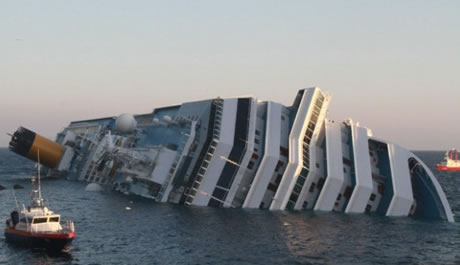
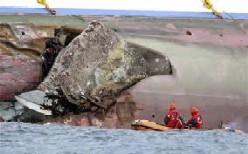
The Italian cruise ship Costa Concordia (Costa Concordia), with 3.208 passengers and 1.023 crew members, ran aground around 10 o'clock in the evening on Friday, January 13, near the island of Giglio (Isola del Giglio), near the coast of Tuscany. On that occasion, seventeen people were killed, 60 passengers and crew members were injured, and 18 passengers are missing.

STRANDED SHIP: Concordia January 14 AM
Accident according to the diary of the Port Authority in Livorno
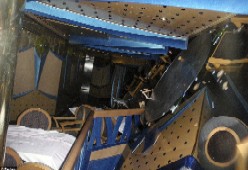
22.06: Carabinieri in Prato inform the Port Authority that a woman called from the ship Costa Concordia and said that the ceiling in the ship's restaurant had fallen on her head and that the crew called passengers to put on life jackets.
22.14: The Port Authority asks Concordia if there are any problems. The officer on duty only replies that they have been without electricity for 20 minutes, but that they will fix everything quickly. The captain offers help with life belts, the officer repeats that it's just a power outage.
22.16: Patrol boat G104 of the Financial Police (Guardia di Finanza), which is near Giglio Island, asks if it should check Concordia.
22.17:XNUMX p.m.: He informs his superiors that he suspects the Concordia is in a worse condition than its officer claims, to the Port Authority and the Duty Officer.
22.26:XNUMX p.m.: The Port Authority asks Captain Francesco Schettino and he answers that the ship is taking in water from the left side, that there are no dead or injured. The Port Authority asks if you need help. The captain is looking for a tugboat.
22.34: Concordia informs the harbor master to evacuate 3.208 passengers and 1.023 crew members.
22.39 The financial police notice that the ship is tilting dangerously.
22.44:XNUMX p.m.: The financial police state that the Concordia ran aground.
22.45: Schettino denies it, says that the ship is floating and that he is trying to turn it.
22.48: The Port Authority asks Concordia about the evacuation. Answer: "We are considering it..."
22.58: Schetino informs the harbor master that he has given the evacuation order.
23.23: Concordia reports that it has a large split on the right side..
23.37pm: Captain Schettino says there are still 300 people on board.
00.10: The local authorities on the island announce that they do not have enough space to take care of the shipwrecked and that they will begin transporting them to the mainland.
00.12: Financial police report that lifeboats can be lowered from the port side.
00.34: Schettino reports that he is in the lifeboat and that he sees three people in the water.
00.36: The financial police see 70 to 80 people at the farm, among them children and the elderly.
00.38: The helicopter sees many people on board and some in the water.
00.42: Schettino and all the officers are in the boats.. Captain de Falco, in his capacity as an official, orders the captain to return to the ship and coordinate the evacuation.
01.04: A helicopter drops an officer on board who reports that another 100 people need to be evacuated and that the rope ladder is safe.
01.46: De Falco orders Sketin to return to the ship using the rope ladder.
02.29: Three people are hanging from the bow of the ship..
02.53: The financial police come to the ship over the bow and report that Sketino was seen leaving in a boat towards the port.
03.05: After transporting 300 passengers, the ferry "Isola Del Giglio" reports that it has taken on board another 300 people, including five wounded and three dead, and that it is returning to the port of Santo Stefano.
03.17: Carabinieri identify Sketin on the quay, but do not arrest him.
03.44: The aviation officer from the ship reports that there are still 40 to 50 people left to evacuate.
04.46: The evacuation is completed.
PASSENGERS: Among the passengers were 1000 Italians, 500 Germans, 160 French, 177 Spaniards, then British, Americans, citizens of Croatia, Montenegro, Bosnia and Herzegovina, Macedonia and Serbia. According to the information transmitted by RTS, all passengers from Serbia are fine. One of our fellow citizens contacted her parents: "Mom, the ship is sinking, I'm fine..."
There were four citizens of Serbia on the ship, three passengers and one crew member," Slavoljub Matić, head of the Consular Department of the Embassy in Rome, told the Beta agency that he went to Grosseto, a place on the coast across from Giglio Island, where the evacuees were rescued. passengers. He stated that the married couple Vujović was evacuated after the accident, the Vujovićs were not injured and received travel documents so they could return home, as did Svetlana Krsmanović, who did not ask for help from the consulate.
Sara Janjić, a crew member who worked in the ship's store, was rescued and is awaiting instructions from the company that hired her in Grosseto.
CONFUSING RESCUE ACTION: When the Costa Concordia hit an underwater rock at about 9.30:45 a.m. near Giglio Island, the passengers were having dinner when the lights went out. They heard a loud crash and the screeching of metal and many fell to the floor. Some passengers claim that the crew told them for XNUMX minutes that it was a simple technical problem that caused the ship to lose electricity. The fact that the ship was without electricity after the accident is confusing, given that modern ships usually have a backup power source in case of emergency.
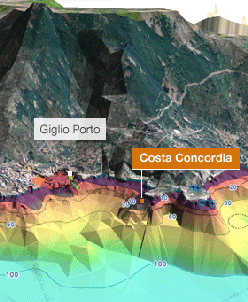
«GUARDA LA TUA ISOLA»: Concordia near the shores of Giglio Island
When water began to seep into the hull, the passengers were ordered to abandon ship. Later findings indicate that the captain gave the order to abandon the ship 70 minutes after the ship hit the underwater rock. After the accident, the blame for this is almost exclusively placed on the captain of the ship, although the question remains as to what was said during his conversation with the company's management.
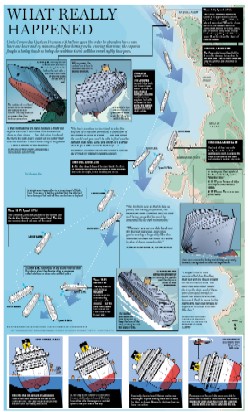
On January 20, the National Post published details of the events before the ship capsized:
9:44: Costa Concordia at a speed of 16 knots (29,632 kilometers per hour) near a point called Le Sola, the tip of the island hits an underwater reef at a depth of 8 meters. According to the investigation, immediately after the impact, the captain sent two officers to the engine room to examine the condition of the ship.
9:45 a.m.: at a speed of 8 knots (14 kilometers per hour), the Concordia turns sharply left towards the port of Gili, at which point the power goes out and the devices switch to the backup system.
9.48am: at 8 knots the ship turns starboard towards the open sea and as there is no power to maneuver the engines, the captain tries to brake the stern.
9:55 a.m.: at a speed of 2 knots (3,7 km/h), the ship slows down and due to lack of power is difficult to steer and turns towards the open sea.
10:05: the crew engages the devices (so-called port-docking thrusters, which allow for side docking, but the position of the stern causes the ship to roll to one side.
10:25: Concordia at 0,7 knots (1,2 km/h) pushed by air conditioning and docking thrusters moves towards land.
10:26: Captain Francesco Schettino replies to the port authorities that the ship is damaged, but that there is no need to be towed, it does not need a tugboat. The ship is slowly approaching the underwater rocks near the shore.
10:50: at a speed of 0,5 knots 80,9 kmh) the ship hits a reef at a point called Gabbionara, turning her bow to starboard. When it touched the bottom, the ship started to tilt to the right and fill with water. Since the ship is heaving, it is difficult to lower the lifeboats on either side and the crew directs the passengers to the starboard side. One of the "stations" for lowering the boats was submerged, the passengers had to swim towards the shore, and those on the left side could now go down to the boats by ladders. The remaining 80 passengers are being rescued by helicopter.
The Reuters agency quotes the statement of Captain Schettino, who claimed at the hearing that he informed Roberto Ferrarini, director of operations at Costa Cruises, about everything by phone 20 minutes after the ship hit the sea cliff, that after that he repeatedly asked the company to send helicopters to rescue the passengers.
The company claims that the captain did not accurately inform them about the extent of the ship's damage and that he informed them late. One theory says that delaying the evacuation of passengers was in the company's interest, because in that case the abandoned ship comes under the authority of the port authority, loses its captain and - its value. Port authorities in Italy have so far claimed that they were only informed from the ship that they had an electrical problem, and not damage to the bottom of the ship, although some passengers told the authorities by phone that the ship had probably hit something, as "everything seemed to them on the head". And the management of the parent company claims that they were informed only about the problem with electricity.
The crew initiated an evacuation before the captain officially ordered "abandon ship," a mutiny of sorts. Schettino, who is accused of delaying the evacuation, has not yet explained why he hesitated, and his lawyer claimed at the first hearing that the captain saved thousands of lives by bringing the ship even closer to the shore after it hit a rock and beached it at a point from which according to him, rescuing the passengers was easier.
People were evacuated by lifeboats, helicopters and other vessels that happened to be in the area.
All ships would have to comply with safety standards prescribed by the International Maritime Organization, which is a member of the UN. Crews should be trained for rescue operations, it is taught at naval academies and even given special diplomas, but most passengers complain that the crew during the rescue operation was disorganized and confused. Some passengers told reporters of the Associated Press that the crew did not give precise instructions to the passengers about the rescue procedure and they were panicking in the dark.
At the moment when the Costa Concordia hit the rock, the passengers were listening to Celine Dion's song "My Heart Will Go On" - the theme from the movie "Titanic" - during dinner in the restaurant...
This is what some Swiss survivors told the reporters of La Tribune de Genève.
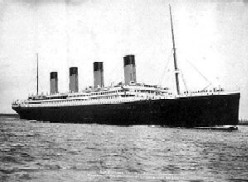
TV MSNBC compares the Titanic with that detail, after which sank on April 15, 1912, out of 2.201 people, only 711 were saved - and the Costa Concordia. There weren't enough lifeboats on the Titanic (there was only room for 1.176 or 53.4 percent of the passengers) - there was on the Concordia. It seems that at the beginning of the rescue there was more panic on the Concordia than on the Titanic.
Titanic was 268 meters long, its tonnage was 46.000 - Costa Concordia is larger in tonnage (114.500), longer (290 m). The width of the Titanic was 28 meters - Concordia 36.
The Titanic sank in two hours and 40 minutes – the Concordia began to list 20 minutes after hitting a rock and capsized after three hours.
The water temperature at the place where the Titanic sank was minus two degrees Celsius - near Concordia 10.
Titanic captain Edward Smith sank with his ship - Concordia captain Francesco Schettino is under investigation.
Many ships are real small cities on the water, so due to the increased number of passengers, maritime experts are increasingly asking serious questions about the evacuation procedure. For example, Royal Caribbean, Celebrity and Azamara all require passengers to be trained in lifesaving equipment before departure.
In the announcement of the Costa Crociere company, it is claimed that all crew members have completed mandatory safety training, the so-called BST (Basic Safety Training).
The readiness of the crew members, the company claims, is periodically checked by the company, the Coast Guard and independent rating agencies - in accordance with compliance with the so-called SMS conditions (Safety Management Systems).
The passengers were clearly unprepared for an emergency. The Wall Street Journal reports that the rescue exercise was not scheduled until the afternoon of Saturday, January 14. The company says that it is their duty to organize a briefing for passengers within 24 hours after the start of the cruise.
On board the Costa Concordia, according to the company, there were more life belts, boats and rafts than the maximum number of people that can be carried on board. The crew had difficulty distributing the life-saving equipment and tried to clear the area by directing the passengers to the starboard side of the ship.
USA Today questions whether cruisers can be evacuated within 30 minutes after the alarm is given, as required by nautical regulations. Concordia passengers disembarked for five hours, possibly longer, and the last rescued person was pulled from the ship a full 14 hours after the order to abandon ship.
Panic reigned. Some of the passengers compare the atmosphere to the one when the Titanic sank.
CAUSE OF THE ACCIDENT - HITTING AN UNDERWATER ROCK, CRUISING CLOSE TO THE SHORE (?): Residents of Giglio Island observe the overturned Concordia from a nearby rock
The German Urlica Šveda slipped and fell from the ship in the crowd that arose during the distribution of life belts. A married couple in a panic gave their own baby in the hands of unknown people with the cry: "Take care of her!" The dinner passengers were in the ceremonial toilets and did not have time to go and change their clothes. They were given blankets to protect themselves from the cold. Some jumped from the deck into the sea. Some swam to shore. The rescue operation lasted until 4,46 am on Saturday. Two people died during the rescue operation. A XNUMX-year-old passenger died of a heart attack.
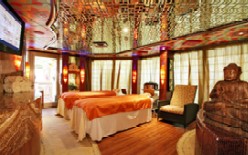
SEARCH: As the ship tilted, rescuers checked for anyone else aboard, combing the 1500 cabins, five restaurants, 13 bars, gymnasium and theater, casino, disco, Turkish bath, solarium and other rooms of the luxury ship Costa Concordia for the last time 290 meters long with a usable area of 6000 square meters. The search for any missing people continued.
MISSING: On Saturday the 14th, the estimate of the number of missing at that time ranged from 1 to 30. The Italian Coast Guard registered 70 out of a total of 4.165 passengers, among whom were 4.234 children under the age of 52. On the morning of Sunday, January 6, the Coast Guard announced that 15 passengers were considered missing, and that on the afternoon of Sunday, January 41, the number of missing would be reduced to 15 (six crew members and 1 passengers), and later in the evening to 17, after divers removed two victims from the inside of the ship. Late in the evening on Saturday 11/15 there was news that the rescuers heard one female and one male voice coming from one of the niches where the air was retained., the port authorities announced that the number of missing was 14, 1 passengers and four members the crew. On Tuesday afternoon, divers recovered five bodies from the submerged part of the ship. They found them in the area designated for gathering for evacuation. Divers continued their search. On Wednesday, January 29, it was announced that sixteen victims had been found. By Sunday, the authorities stated that 25 people were missing. The search was interrupted due to the storm and continued on Monday, January 25. On Monday, two female bodies were found in the ship's Internet cafe and the number of dead rose to 1. During the following week, the search for the victims continued in parallel with the fuel pumping operation. On Saturday, January 20, the body of a woman in uniform who did not have a life jacket was found. The number of victims increased to 23, the number of missing 1...
The main suspicion fell on Captain Francesco Schettino, who is suspected of having led the ship into dangerous waters. However, did the captain's error reveal the design flaw of the large cruisers?
While the rescue operation was still ongoing, some media reports speculated about the cause of the Concordia's relatively quick capsize. One school of thought says that one hundred years after the sinking of the Titanic, hailed as a technical marvel, the Concordia, also hailed as the record-breaking ship of its time, suffered a relatively stronger blow than the Titanic, as the Titanic brushed against an iceberg and continued on, while the Concordia had a more direct contact with the rock receiving a stronger force from it.
Another school of thought links the rapid overturning and uneven sinking to the captain's intention to run the ship aground in shallow water, so perhaps the support on the bottom increased the rate of heeling.
Angus Menzies, a retired British naval commodore, reminds that modern ships are built so that in case of heavy damage they sink evenly, which is made possible by pumps and hermetic doors. The Concordia quickly tipped and overturned. Ships are usually constructed like an onion head, if one shell gives way, the water should be retained by the next one, and between those «shells» there should be chambers that can keep the water from penetrating further. The Titanic was divided into 10 chambers that could theoretically be hermetically isolated from each other, and the Concordia had 18. However, some sailors say that the Concordia was constructed so that if three of the 18 chambers sink, the ship loses stability and sinks. The split in the hull of the Concordia is 48 meters long.
This gives material to those who think that the greatest ship of its time was constructed with one eye on profit. Alan Graveson, an official of the international professional seamen's union Nautilus, claimed in a statement that the operators, the orderers of such ships, put profit above safety, and are only looking to fill them with as many decks as possible.
International regulations say that any ship carrying more than 12 people must comply with international standards (International Maritime Organization regulations), and the so-called SOLAS (Safety of Lives at Sea) system introduced in 1914, two years after the sinking of the Titanic, which has been developed until today days. These regulations cover every aspect of the ship's construction and operations and are aimed at ensuring that the ship, despite serious damage, can return to port, or remain afloat long enough to rescue the passengers. The regulations were last improved in 2010, and the Concordia was built four years earlier…
There were unregistered passengers on board, so the number of missing people may be higher, Franco Gabrieli, an official of the Italian rescue service, said on Sunday, January 22, writes the American newspaper Christian Science Monitor. The relatives of a Hungarian woman told the Italian authorities that she had called them from the ship and had not answered. She could be one of the unregistered passengers. On Monday, January 23, it turned out that the person's missing person report was false. The Hungarian Ministry of Internal Affairs announced that the investigation showed that the person who reported the disappearance did so in one previous case, and that both times she used the false identity of a person who had been dead for three years...
A German woman from the list of missing people called from the house she happily reached.
RESCUERS: In the late afternoon of Saturday 14/1, divers were searching in the bowels of the ship, a third of which is under water, for passengers who may have survived. On Sunday, January 15, police divers continued their search in the bowels of the stranded ship. A honeymooning couple from South Korea were rescued from a part of the ship that was not underwater. Then, another survivor with a broken leg was found in one of the working cabins, but the rescuers did not touch him at first in order not to worsen his condition. Later, the Italian who worked in the cabin service was pulled from the ship by helicopter. Another passenger was found early Monday morning. The search was stopped for a short time on Monday because the ship moved a little under the influence of the worsening weather, and the search resumed on Monday evening. On Tuesday, an opening in the hull was blasted to allow divers to penetrate inaccessible parts of the ship - with very little hope that rescuers could find any more life.
The rescued passengers were accommodated in hotels and in a church on the tourist island of Giglio, where only about 700 people live in the winter. For many, it is not known where they went.
RESPONSIBILITY OF THE CAPTAIN: The prosecutor for the investigation of this accident, Francesco Verusio, stated that the captain of the ship, the Neapolitan Francesco Schettino, was on the bridge at the time of the accident. He was aware of the situation and undertook a rescue maneuver, but the rescue was hampered by the ship's sudden heeling and as yet unknown technical problems. Some passengers told Croatian television HRT that the captain sat with the guests at dinner and that on that occasion he drank maybe a liter of wine. Experts conducted tests as part of the investigative procedure and concluded that the captain was not under the influence of narcotics while steering the ship.
That there was chaos everywhere was shown by Simon Calder, the travel manager of the Independent newspaper, who 48 hours after the Knnkordia hit the rock, paid 882,70 pounds (1,063 euros) and booked a ticket for the next cruise online and even, while ship capsized lying in a narrow shoal - got ticket and travel documents including cabin number.
The online booking system works even while the ship is sinking...
Francesco Schettino became a captain in 2006, he is 52 years old, he joined the Costa Crociere company in 2002 as an officer in charge of security. As a captain he went through the usual tests. When not on board, Francesco Schettino lived with his wife and daughter in the small town of Meta di Sorrento, south of Naples.
ROUTE: The Costa Crociere company distances itself from the captain and says in a statement that it seems that the captain made errors in judgment that have serious consequences - the route taken by the ship was too close to the coast. "Guarda la tua isola", he said, according to the serious Corriere della Sera, to one of the crew members, head waiter Antonello Tievoli, whom he had kept on board the previous week, although he had asked to go on holiday with his family on the island of Giglio. A few days later, however, the BBC quotes the captain's statement from the investigation, according to which he wanted to pass by the island to say hello to an old captain who lives on the island.
A journalist from Giglio Island said that cruise ships usually go where the Concordia was heading, but that she came too close to shore. One fisherman from the island said that he was surprised that such a ship passed through that narrow strait instead of going around the island from the open sea side, where according to some reports it was supposed to pass according to the sailing plan. Some reporters report that the passage of cruise ships near small harbors is unusual and that the crews resort to this to entertain guests by showing them the lights on the shore. Cristiano de Masso, the company's spokesman, says that the ship did not deviate from the course it sails "52 times a year", but later it turned out that it did, at least after hitting the rock. On August 11 last year, the company allowed the ship to pass very close to the island to greet the participants of the local festival. The captain, judging by that, now tried to repeat that route without authorization.
In the lighter media, as well as in the investigation, special attention has been paid in recent days to the twenty-five-year-old player with Moldova, Domnika Chemortan, who was allegedly seen half an hour before the accident in a restaurant sharing a jug of wine with the captain. She was later seen on the command bridge during the chaotic evacuation. She later explained that the captain personally invited her to the bridge to translate information for about 100 Russians who were on board. Having worked in Romania, Italy, France and Italy, she speaks four languages. She was not engaged on the ship, but cruised to celebrate her 25th birthday. She repeats that she has a daughter who lives with her mother while she is at sea and that she is offended by media speculation that she is the captain's lover - she tells how the captain showed her pictures of his children, which lovers don't do. He claims that the captain acted selflessly and saved many people.
At the time it hit the underwater rock, the ship was 2,5 miles off course, according to CNN. Gianni Onorato, director of the Genoese company Costa Crociere, which owns the ship, however, states that it is not correct to say that the ship was outside the prescribed route. The company speculates that the ship came close to the coast because of some technical problem it had. Such a ship should be equipped with radars, sonar and satellite navigation in addition to classic navigation using maps.
The Wall Street Journal cites people close to the investigation and writes that in the first statements during the investigation after the accident, the captain said that he did not use the ship's electronic equipment or computers near the island he approached, but that he "navigated by eye", explaining that acted because he knows the seabed in that part well, having passed there three or four times...
The details of his movement will be clearer after the analysis of the black box, similar to the one that records all the relevant technical data in airplanes, which was found. The Italian Coast Guard says the captain tried to turn the ship towards the port of Giglio Island to facilitate the evacuation, but that the ship began to capsize as it approached the port. This is contradicted by the fact that no alarm was declared on the ship.
Before flipping over on its side and settling on the bottom in shallow waters quite close to shore, the ship drifted uncontrollably, and the captain claims he steered it toward shore to facilitate a rescue.
It also seems that the captain's decisions about the emergency situation on the ship were not in accordance with the procedure in the Costa Crociere company, which in some details, as it is claimed, "go beyond international standards".
Captain Francesco Schettino was interrogated and, together with the first officer of the deck, Kira Ambrosia, arrested. He stated that at the time of the accident, the ship was moving at a cruising speed (19,6 knots or 36,3 km/h) in waters that he was convinced were safe, that is, according to the nautical charts, there should have been enough water under the ship.
The Italian prosecutor accepted the claims of some passengers and suspects the captain of leaving the ship before all passengers were evacuated. When the captain left the ship, there were still 300 passengers on board.
The latter denies this and explains that he did not leave the ship but fell from it: "Passengers were running all over the deck, trying to squeeze into the lifeboats." I didn't even have a life belt, because I gave it to one of the passengers. I was trying to get them into the boat one by one," said Schettino, claiming that at that moment the ship suddenly tilted by about 60-70 degrees, that is why he tripped and thus ended up in one of the boats. The London Telegraph reports that the captain, as he put it, "fell into the lifeboat" four hours before the evacuation was completed.
On Tuesday, January 17, several media outlets published a recording of the conversation in which the Port Authority from Livorno, in an unusual tone, calls the captain and the first officer to return to the ship immediately, and to report how many more passengers, how many women, how many children are on board. The captain replied that he was in the lifeboat and was coordinating the rescue operation from there. He did not return to the ship even though he said he would - he was arrested on shore.
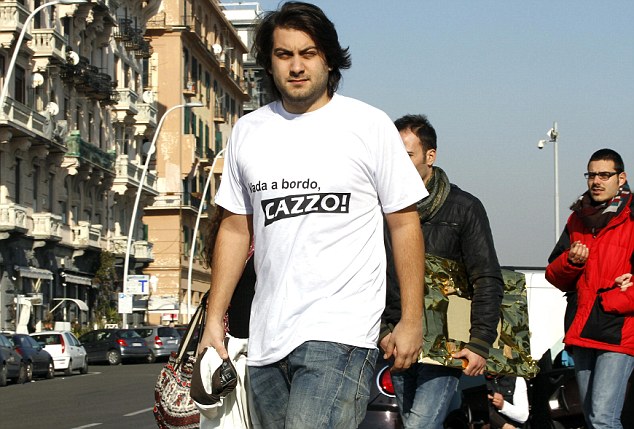
The captain is now enemy number one in Italy. And the hero of the day is Gregorio de Falco, a Neapolitan, like Schettino. Italians call it Santo Subito (Holy Immediately) and wear t-shirts with a quote from the bold message to the captain to return to the ship "Vada a bordo, cazzo".
Crew: 1.068
Built: 2006.
Shipyard: Fincantieri's Sestri Ponente, Italy
Deck: 13
Carrying capacity: 114.500
Cruising speed: 19,6 knots or 36,3 km/h
Passengers: 3.000
Registration: Italy
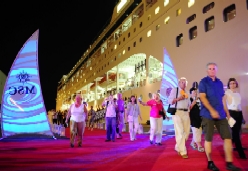
At the time of its launch, it was advertised as the largest cruise ship in Europe, as a ship where you can experience the carnival atmosphere. The luxury floating hotel, advertised as a floating castle for entertainment, cruised the Mediterranean Sea, and was scheduled to stop in the port cities of Spain, France and Italy.
The Italian company Costa Crociere is owned by Carnival Corporation, based in Miami, Florida. At the head of the Carnival Corporation is the American Israeli billionaire from Florida Micky Arison (Micky Arison), 169th on the Forbes list of billionaires in 2011, whose wealth is estimated at 5,9 billion dollars. Forbes ranked him the 54th richest person in the US.
In the entertainment industry, the story of the Titanic shipwreck (2.223 people), which sank on April 15, 1912 and claimed 1.517 lives, was exploited.
As a rule, the memory of the Titanic is accompanied by the message that it cannot happen today. The statistics of maritime accidents in the last half century do not confirm this at all:
July 25, 1956: Two passenger ships, the Italian Andrea Doria and the Swedish ship Stockholm collided in Massachusetts, the Andrea Doria sank, 46 people drowned.
August 31, 1986: The Soviet passenger ship Admiral Nahimov collided with a cargo ship in the Black Sea, sinking and claiming 423 lives.
December 20, 1987: The Philippine ferry Dona Paz collided with an oil tanker, caught fire and sank, killing 4.375 passengers.
September 28, 1994: The ferry Estonia sank in a storm in the Baltic Sea, killing 852 people.
May 21, 1996: The Bukoba ferry sinks in Africa's Lake Victoria, killing about 1000 people.
September 26, 2002: The Senegalese ferry Le Joola capsized in a storm in The Gambia, killing 1.863.
February 3, 2006: The Egyptian ferry al-Salam Boccaccio sank in the Red Sea, killing around 1000 people.
June 21, 2008: The Princess of the Stars ferry capsizes in a typhoon in the Philippines, killing 700 to 800 people.
July 10, 2011: The Russian river cruiser MS Bulgari sank in the Volga River, killing 120 people.
Concordia has had incidents before: in 2008, strong winds in Palermo threw the ship on the dock, the ship was damaged, but there were no casualties; In February 2010, a Costa ship longship, the Europa, hit a dock in Sharm el-Sheikh, Egypt, killing three crew members.
According to estimates by Bloomberg Businessweek, the accident of the Concordia cruise ship could cost insurance companies between 600 and 800 million dollars. According to that estimate, the costs of the insurance companies will exceed the $512 million that was paid after the Exxon Valdez tanker accident in 1989.
Among the dozen insurance companies that may be affected by the Concordia accident, Bloomberg mentions Assicurazioni Generali SpA and RSA Insurance group Plc.
According to Reuters, the ship is insured for 405 million euros.
The Carnival corporation said that its self-insurance for damage to the vessel is only $30 million, and for indemnification of third parties due to injuries, the company's insurance is about $10 million.
More than 70 passengers from the "Concordia" filed a lawsuit against Costa Cruises on Tuesday, January 17. The Reuters agency reminds that the ship ticket is a type of contract, that the contract in the Carnival company is very detailed, that the company has secured many rights for itself, including the right to violate the privacy of passengers (inspection of bags), that it estimated the compensation for lost or destroyed items at $50 per passenger, but that the contract gives passengers the ability to file a lawsuit.
A passenger who wants to file a claim for injury or endangerment of life must apply to the US Federal District Court in Miami. In the case of Costa Cruises, the ticket could be treated as an international contract under the Athens Convention (the amount of compensation that can be claimed is, according to lawyers cited by the agency, limited to $80.000.
Costa accounts for 17 percent of Carnival's capacity, controlling half of the cruise market. That company published an estimate that the financial consequences of the accident and the loss of the ship in 2012 will amount to 95 million dollars, but James Rollo, an analyst at the Morgan Stanley company, estimates that the losses will be higher.
According to the Reuters agency, the accident of the Concordia ship could become the largest insured loss in history and could reach one billion dollars, if compensation for injuries, loss of life of private property of passengers, property damage due to the loss of the ship, and environmental damage that will occur if spilled its 2.380 tons of fuel off the coast of Tuscany.
Costa Cruises SpA offers 11.000 euros in compensation, Codacons asking for 125.000 each
The company Costa Crociere SpA, after a one-day negotiation, offered 27 euros in compensation to each of the 11.000 passengers of the Costa Concordia ship on January 3.206 for the fear suffered and the lost luggage. Parent company Carnival Corp. will also refund passengers (from 61 countries) the money they paid for the ship's tickets and reimburse expenses for travel and medical treatment after disembarkation. Passengers can also initiate private lawsuits, if they are not satisfied with the amount of compensation. According to the Reuters agency, those passengers who accept the offer should sign a statement waiving the lawsuit against the company. The Italian consumer protection group Codacons (founded in 1986) is otherwise collecting documentation to file a collective action before the court in Miami, or in the Italian city of Grosseto, which demands compensation of 125.000 euros for each passenger, for the fear suffered, lost luggage, endangerment of physical and moral integrity , and at least one million euros each for more serious cases.
Many companies expect that after the accident of the Concordia, the number of tourists opting for cruises will decrease, writes USA today. Ratings agency S&P announced on Sunday that it expects that in 2012 the cruise line Carnival Corporation, the parent company of Costa Cruises, will be affected by the loss of the stranded Concordia, and that the incident will affect other "cruise brands".
Until this week, S&P had otherwise expected moderate growth in the "cruise industry." However, USA today notes that Carnival Corporation, which launched its 27th cruise ship on April 2011, 100, has a lot of capital, that its shares will fall for some time (currently falling: -4,8 percent), but that it will suffer a loss.
Barclays bank analyst Felicia Hendricks estimated in a statement to Reuters that Carnival's earnings could fall in 2012 by 29 percent. In a survey by this agency, one in five among 1.500 travel agents declares that the incident jeopardized the sale of arrangements.
According to Australian researcher Ross Dolling, a professor in the School of Marketing, Tourism and Leisure, the cruise tourism industry is booming. If there is industrial tourism, it might be cruise tourism. The mentioned Carnival corp, which has now lost the ship, has a program of «entertainment ships». The Disney Corporation also got involved in that type of maritime business.
In 2009 alone, 14 new large ships were launched in the Caribbean region: AMA Waterways, Avalon Waterways, Carnival, Celebrity, Costa, MSC Cruises, Royal Caribbean International, Seabourn, Silversea Cruises.
Cruise tourism brought $37,85 billion to the US economy in 2010, while in 2009 that revenue was $35 billion. That tourism sector grew by 7,8 percent last year. It employs 314.000 people in the US.
According to the data of the European Council of companies that organize tourist cruises (The European Cruise Council), about 25,2 million passengers visited European ports in 2010, and about 5,2 million passengers cruised in Europe that year, which brought the companies 35,2 billion euros in revenue and provided around 300.000 jobs. According to the association's data, there were 198 cruise ships in Europe - from those that host 3.600 passengers to those that hold less than 100.
Cruises may no longer be the exclusive tourism of the rich and old, as the majority of our public perceives it, but relatively mass tourism on the rise - around 16 million people go on cruises in the world every year. (Prices: on the order of 1000 euros per person for a ten-day cruise, and there are also 300.)
In the Caribbean, in 2010, compared to 2009, the number of passengers increased by 6 percent. Cruises were previously described as tourism for the elderly rich (ten years ago the average age was 65) - now Ross Dolig counts baby boomers as the main consumers of this type of tourism (the average age of cruise passengers has dropped to 45). In 1,6, more than 18 million children under the age of 2010 sailed with their parents on cruise ships.
In 2004, the highest number of Americans who traveled to Europe and the Mediterranean on cruise ships was recorded.
The search for the missing was interrupted for the second time on Friday, January 20 in the morning, because the ship moved again the previous night due to rough seas and, according to the newspaper Crisian Science Monitor, it is moving at 1,5 centimeters per hour. On Sunday, January 21, media reports said that instruments placed on the wreck showed that the ship was sliding at 15 millimeters per hour on the sandy bottom, but that it was not clear whether the ground was settling, or whether the wreck was sliding inexorably towards the edge of an underwater chasm 30 meters away.
A remote-controlled robot submarine was lowered into the sea to test the possibility of chaining the ship to land to prevent the ship from sliding further into the depths. Insuring the ship would allow the Dutch company Smith to start pumping fuel from the ship.
A state of emergency was declared on Giglio Island on Friday, January 21. The Italian Minister of Ecology, Corrado Clini, warned that there is a risk that the ship, from the slab on which it is lying, will slide down the underwater cliff of 1 to 50 meters, that it will suffer new damages, and that the fuel will start leaking from it.
If that happens, it could be Italy's worst maritime accident since the 114.000 sinking of the Amoco Milford Haven, carrying 1991 tons of oil, near Genoa.
A stranded ship threatens to endanger the living environment in one of Europe's largest nautical national parks in the Tyrrhenian Sea, a habitat for dolphins, whales, turtles and a dozen rare plant species, including the so-called Poseidon's grass, which reaches up to a meter in length and provides protection to fish.
If the diesel spilled, the currents would carry it towards the islands of Elba and Montecristo (which inspired Alexandre Dumas' novel The Count of Montecristo).
Pumping out fuel
In the beginning, they tried to reduce the consequences of a possible fuel leak only by placing floating obstacles in a length of one kilometer.
The Italian Department of Civil Protection issued a warning late Thursday evening that from 19-21. January can expect 36 hours of bad weather in the west of Italy - northeast winds in the Valle d'Aosta area, Piedmont and mistral in Sardinia, dry weather in the mountains in the western areas, and in the coastal zone - storms. The sea will be particularly rough on Saturday, January 21.
The Dutch firm Smith, one of the most famous companies for remediation of maritime accidents, was hired to pump fuel from the 114.500-ton wreck of the Concordia. The price of the work is measured in millions of dollars.
Pumping out the fuel (heavy diesel) involves penetrating up to 17 heavy tankers with fuel that becomes denser and more viscous in the cold, heating the fuel to the point where it is possible to pump it out, which is done by pumping water or air into the tankers that pushes the fuel . So far, there is no information that the fuel has started to leak. Another problem is about 200 tons of machine oil. The third problem is the by-products of human stay on the ship - it is something like cleaning the sewage of a small town of 4000 inhabitants.
Divers are during the week 23-29. In January, they worked on fuel pumping, found the position of the tanker, attached diesel pumping devices that pull the pumps from a nearby barge, and from there they are transferred to special tankers. Two weeks after the sinking of the ship, on Saturday January 28, pumping was interrupted due to rough seas...
And removing the ship is a complicated undertaking that will cost millions and may take a whole year. One of the ways to take the ship out of the sea is to patch the 48-meter-long crack, to straighten it somehow and tow it, and the other way is to cut the ship and then try to take it away on barges. The venture is worth millions of dollars.
MORAL JUDGMENT ON T-SHIRTS: "Vada a bordo, cazzo".