Winston Churchill is credited with stating that "the strongest argument against democracy is a five-minute conversation with the average voter." Whether Churchill actually said it or someone else, the line is, hmm… you don't know if it's wiser or more accurate. With the fact that its true meaning can only be seen when it comes from a convinced supporter of democracy, which Churchill certainly was (within the understanding of his time). A true democrat is always suspicious and inclined to consider the internal contradictions and imperfections of his own beliefs or political systems based on them. For the opponent of democracy, au contraire, doubt is superfluous. He knows everything and there are no cracks in the granite buildings of his illusions. Until the ships collapse so spectacularly that nothing but dust remains. If he survives them, he spends the rest of his life looking - somewhere outside of himself - for the craziest possible explanations for how it happened, and it was so improbable.
Churchill's main wartime opponent, a certain Adolf Hitler, did not want to waste five minutes chatting with the "average voter", more precisely, any voter, including the "average", he canceled it as soon as he got the chance, i.e. as soon as he got hold of power. He immediately granted himself and his somnabulic visions an unlimited mandate, which was beaten by the "thousand-year-old Reich". And the fact that he came to power with the crucial support of that "average voter" is less paradoxical than it seems. With a bit of generalization, it could be said that the "average voter" who most often voted for him was the "average voter" who, according to his own vote (and then also according to himself as an autonomous civil subject and "small shareholder" of state politics, who wonders about something and decides about something ) does not have any value, let alone a built and unchanging "ideological" relationship, but treats it only as some of its own small, poor capital. And he will be happy to rent it to a reliable payer, and even more willing to give it up permanently if he is promised some kind of compensation or appanage.
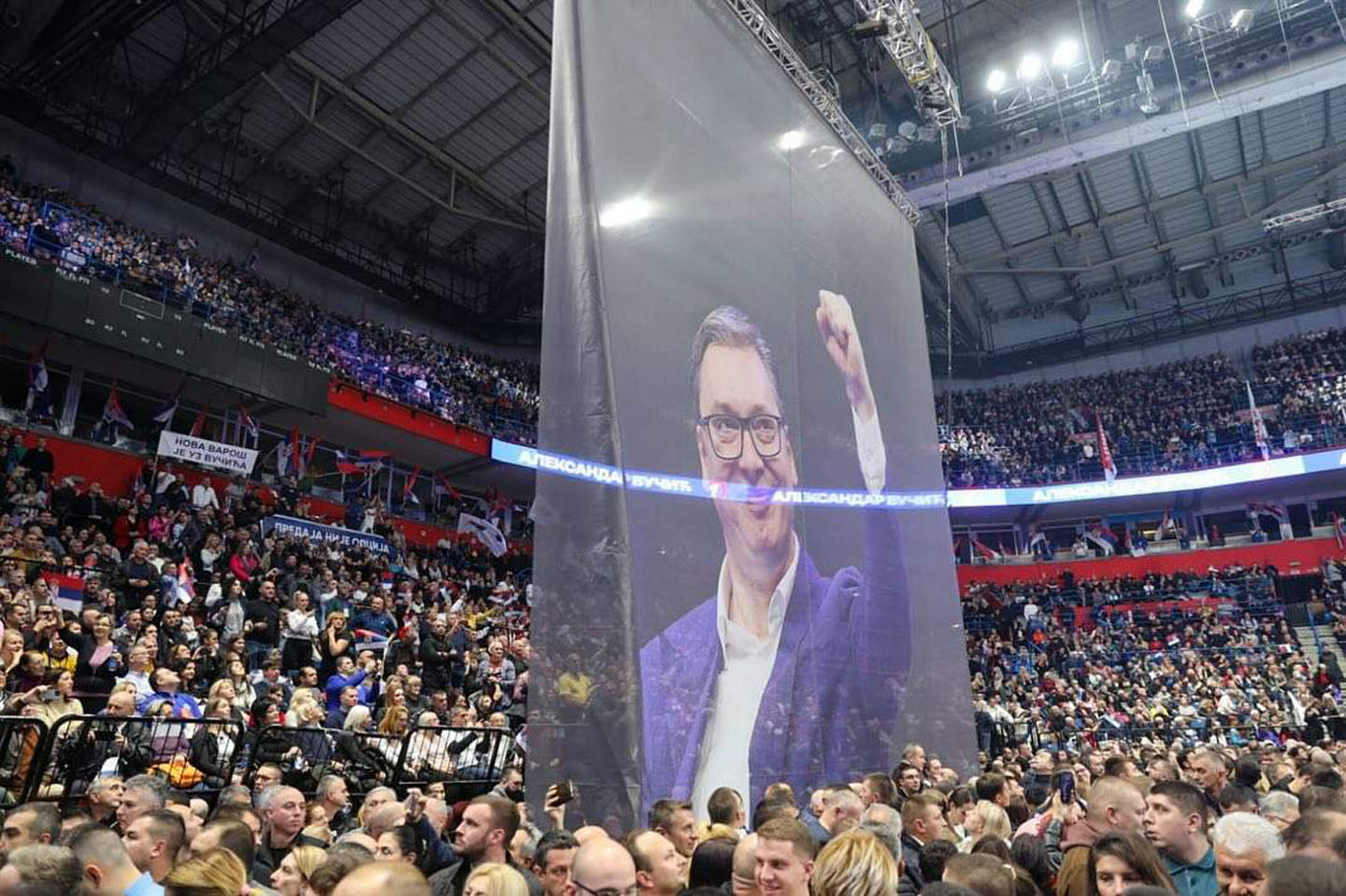
God knows why, just before our elections, I was struck by these thoughts about distant faces and events in time and space. Just about to insinuate something. I'm just maybe a little melancholic, which may have something to do with the sad sight of those people caught on camera and microphone "on the margins" of the progressive dernek in the Belgrade Arena. You have probably seen and heard them: they are grateful to "Vučić" not only for everything he gave them, but also for everything he took from them (quite seriously!), and they thank him in advance for future gifts from our collective pockets, including 2500 dinars each, which were promised to them if they would be so kind as to vote correctly. And they will be kind, why not, what does it cost them?
Are these sad, humiliating statements and scenes "the strongest argument against democracy"? No, but they are the strongest argument against the para-democratic travesty in which we live: formally, we have democracy, pluralism and free elections, fundamentally, we have none of these because we are deprived of what constitutes their precondition: strong and independent institutions as a solid barrier to anyone's arbitrariness, real separation of powers (checks and balances), a serious Constitution and good laws that are respected, strong parties of all kinds and an even stronger civil society, free media, etc. Add to that the depressing level of civic consciousness of that Churchillian "average voter", and feel free to weep.
Of course, it's not worth complaining about the state of things - everyone works with what they have. But it is very important to be able to make a distinction between the one who works in the interest of the "average voter", even though he sometimes ironizes and laments the apparent futility of his work, and the one who destroys and invalidates that same "average voter" while hypocritically flattering him, using him in the short term as fuel to maintain its machine of alienated and usurping power, and in the long term systematically preventing any possibility that this, or at least its descendants, ever emancipates and becomes something more than a serf who is obedient and grateful for a thrown slice of moldy bread. Which, by the way, he mixed himself, from his own, i.e. our wheat.
Someone will say, and they will be right, that the sadness and unhappiness in front of the Arena is still not representative of the "average voter", no matter how "average voter" we are - below average. That is true, but mostly to the extent that in front of the Arena they will honestly and simple-mindedly express what some others only think and are guided by. And that their wage for publicly renouncing the status of a free citizen is lower. Is that difference enough to comfort anyone?
Bideway, the alleged cynic and skeptic Churchill defeated the maniacal auto-enthusiast Hitler in the war. Not long after that, the British removed the war winner in the elections coldly from power. Hitler, on the other hand, ended up miserably in a bunker in the middle of destroyed Berlin and destroyed Germany. So, he lost the war, but probably even on the day of his death he would have won elections from the few surviving "average voters". Until the end, they remained grateful to him for the nothing he gave them and for the everything he took from them. What it tells us and what we should do with that knowledge, let everyone decide for themselves.