It is not just Novi Sad, everywhere in the country, despite the low paying power of citizens, real estate prices are rising rapidly. Not only have the square footage skyrocketed, but apartments are being sold faster than they are being built, and it is often impossible, or very difficult, to buy an adequate, desirable apartment even if you have the cash in your suitcase. How and why does this happen? How to explain the paradox that the explosion of prices and demand for real estate occurs at a time when, by all parameters, the average family cannot even cover basic living expenses, let alone buy apartments and houses?
The experts we talked to first of all point out that Serbia lives for the most part from the construction and investment industry, if you don't count the enormous and continuous borrowing abroad. They state this as a serious anomaly, because the state must not rely so strongly on one branch of the economy, especially the construction sector, which is prone to serious oscillations, jumps and falls, even in normal economic and political conditions.
They state that for now it is working in a kind of way perpetuum mobile, which is based on the circulation of money and real estate. "Surplus money" from the budget (and these are funds that ended up in private coffers in various ways, in popular terms - what the progressives lavished on the citizens), as well as part of foreign loans and investments (it is believed that as much as 25 percent of the funds from of Chinese investments abroad ends up in the pockets of the domicile political elite, as a pre-calculated corrupt share) flows into the construction industry, which then again fills the budget. The new elite that is emerging from the state manger of money, and there is obviously a lot of money, invests where it only knows and knows how - in real estate. This also applies to other citizens, who are hundreds of miles away from investing in stock market shares, and a square meter is a square meter.
It should be said that it is not only real estate in Serbia, but also abroad, and Greece and Turkey are especially popular. One large construction entrepreneur from Ankara, according to our interlocutors, looked for an intermediary in Serbia when he saw statistical data on who is buying apartments on the Turkish coast.
All roads lead to Novi Sad
The rise in prices is also influenced by the systematic emptying of the so-called straw man in the context of devaluation of foreign currencies and high inflation. In order for the money not to lose its value, it is invested in real estate, and for now it is a smart solution, considering the constant increase in the value of a square meter. Often buyers leave apartments completely empty, because they don't want to "mess around" with tenants, since they practically make money without them.
When it comes to Novi Sad, we should also add the fact that this city has a very strong IT industry where salaries are extremely high due to direct cooperation with foreign companies, so employees can easily afford housing loans. And banks, given the surplus of money on the world market, give loans very easily and generously. And when the banks are easy and generous, you should always ask yourself what it is all about.
In Novi Sad, in real estate, which further increases the demand, money (who knows how) flows from BiH-entity Republika Srpska. Capital, our interlocutors say, does not want dangerous areas, and the neighboring country seems to be like that, so it moves to where it is safer. Novi Sad is considered a safe city, so companies from the RS buy apartments and build buildings here. There were even witty proposals to name a new boulevard in Novi Sad after Milorad Dodik. Apart from the RS, buyers of real estate in the capital of Vojvodina are also those from Kosovo, Montenegro, and central Serbia.
The great pressure on Novi Sad is due to the fact that there are good chances for employment, and there is also a large state university. In the past, we witnessed the emptying of villages and people moving to nearby cities, and now the cities are being depopulated. The cities of Vojvodina, formerly successful economic centers, are rapidly emptying, and whoever can - moves to Novi Sad. Or at least he buys an apartment in it, if he has extra money, so that the children have accommodation when they come to study.
We should not ignore the fact that a good part of citizens who live abroad, and earn good money there, invest their savings in real estate in Serbia. There is a lot of talk about the fact that the rise in prices of apartments and houses is also related to the influx of refugees from Russia and Ukraine. Our interlocutors, however, indicate that this story is a bit exaggerated, that it is true that they buy real estate to a certain extent, but that they mostly rent it, because Serbia is mostly just a stopover for them. Speaking of the war in Ukraine, one more important factor for apartment prices should be mentioned, namely raw materials. The price of fittings, for example, went up almost three times.
An overinflated balloon
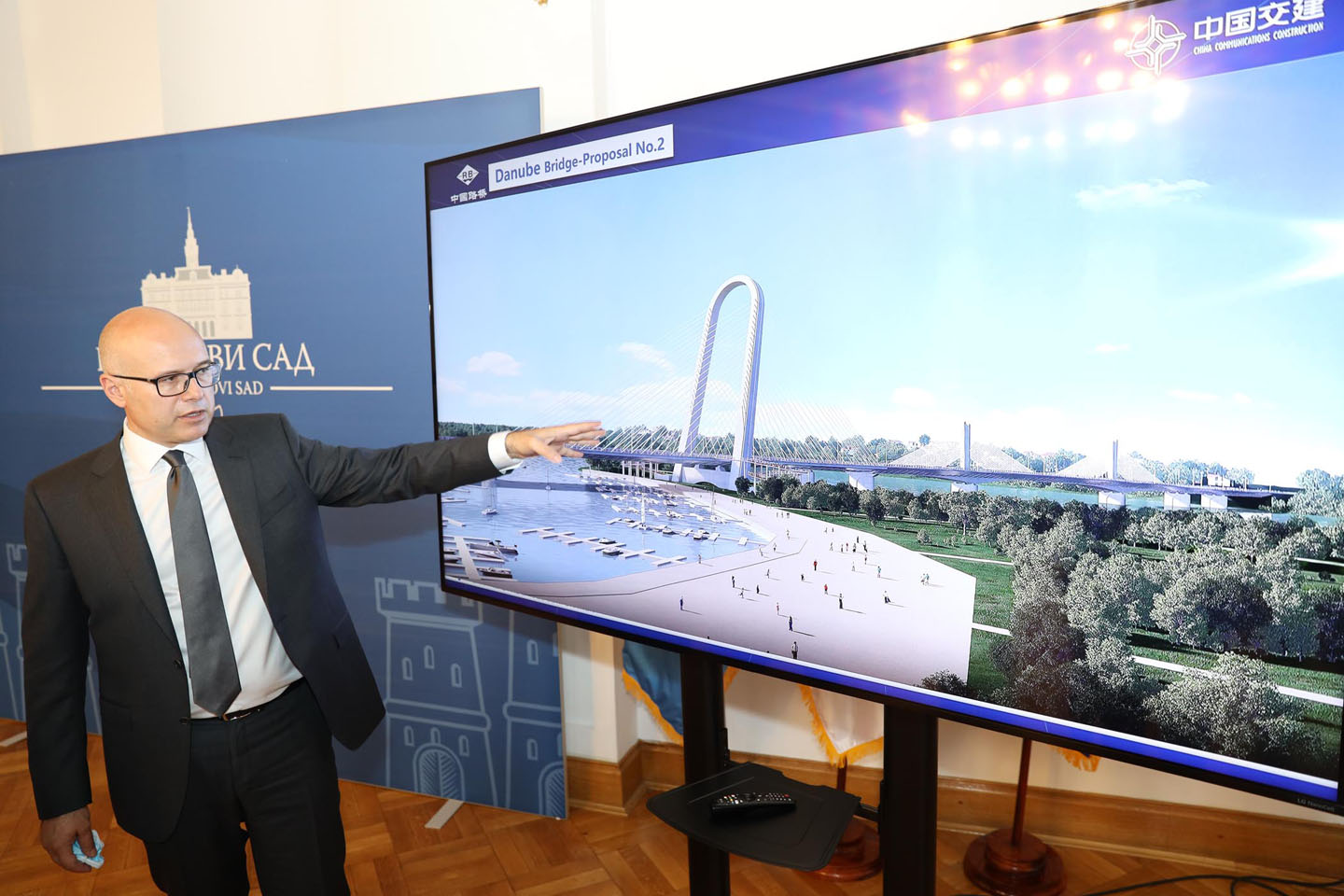
However, this entire complicated fairy tale, in which investors, the state, and even apartment buyers benefit, has downsides and an inevitably unhappy ending. The bad side is urban violence against the city, which is particularly visible in Novi Sad, and whose goal is to maximize profits and accumulate as many housing units as possible on a small plot of land. Funds that investors give for various city taxes, which should then be invested in infrastructure development, end up who knows where. That is, the accumulation of buildings and structures is not accompanied by appropriate infrastructure. Novi Sad, when it rains even more, turns into a complex of lakes, the Danube coast stinks of sewage, and it is very likely that there will soon be serious problems with the water supply.
In the next two years, it is planned to build at least one million square meters, or about 20.000 residential units, in Novi Sad. This will definitely lead to saturation, and then, according to experts, the fairy tale will slowly come to an unhappy end. Prices will go into reverse. Given that due to the growth of the Euribor, the increase in loan installments has also started (see text "Financial Storm"), which can be doubled or even tripled, it is realistic that some people will not be able to repay the loan, and that will end up activating mortgages.
Falling apartment prices will lead to the fact that some will start selling surplus apartments, especially since a serious economic crisis will prevail in the coming years. In addition, the state will have to pay back huge loans, which are also partly linked to the Euribor, and will have to cover the huge costs of state losers, so they will not be able to steal so much from the budget, and especially they will no longer invest in real estate. . Many construction and investment firms will go bankrupt, leading to a whole host of other problems. The budget will remain without a significant internal inflow...
Things are not going to turn out well, be sure of that.
Read daily news, analysis, commentary and interviews at www.vreme.com