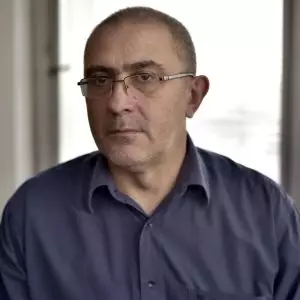
Lawyer, lawyer and legal expert Independent Association of Journalists of Vojvodina (NDNV) Veljko Milić, also a member of the Permanent Working Group for Security journalists (SRG), speaks for "Vreme" about the effects SRG-a, endangered journalists during crisis reporting, as well as room for progress in improving their security.
"WEATHER" What are the key achievements of the Permanent Working Group for the Safety of Journalists since its inception until today??
VELJKO MILIC: From the establishment of the SRG for the safety of journalists until today, certain developments have taken place thanks to the activities of the Supreme Prosecutor's Office. First, all prosecutor's offices in the Republic of Serbia keep records of events that have been reported as criminal acts committed against journalists. Based on those records, the Supreme Prosecutor's Office delivers a quarterly newsletter to the SRG members, that is, information on all individual reported cases. A system of contact points has been established in journalistic and media associations that are members of SRG, every police station and every prosecutor's office in Serbia. This system enables journalists to have a 24/7 contact point in their association to which they can report an event that they consider to be a criminal offense, and then the contact point from the association informs the contact points in the police and the prosecutor's office about it, which are obliged to act urgently upon the report. Also, all prosecutor's offices in the country are obliged to act urgently in cases that are conducted due to criminal acts against journalists. In addition to the system of contact points, a Safe Line (phone number: 0800 100115) has been established, which is also available to journalists 24/7 and where they can report any events that they consider to be a threat to their safety and receive appropriate legal advice. Also, SRG was a good channel of communication with the prosecutor's office and the police, where representatives of journalistic and media associations could generally get information about current cases.
What are the key activities and achievements of SRG and regarding the safety of female journalists?
That problem was approached mainly using the mechanisms I have already mentioned. In addition, the records maintained by the Supreme Prosecutor's Office are now classified according to gender, so accurate data can be obtained on the percentage of attacks on female and male journalists. Frequent cases were that, when the safety of female journalists was threatened, they were invited to attend SRG meetings in order to provide them with some form of support and to receive more information about their case.
What is he like, in your opinion, the position of journalists reporting from protests in the last year?
It has gotten significantly worse and is certainly the worst it's ever been SRG established for the safety of journalists. It is indicative that they are exposed mainly to attacks and excessive use of force by the police. Unfortunately, the police still do not understand that their role in public gatherings is not to Frthey are preventing journalists to report, but vice versa - to provide safe conditions for journalists to work. In addition to physical attacks, confiscation of phones and tools for work, female journalists are also exposed to misogynistic comments and threats sent via social networks.
What are the key failures of the Permanent Working Group, that is, where there is the most room for improvement?
Despite all the efforts of the SRG members to improve the safety of journalists, the picture of journalists' threats has remained at least the same, and in the last year, much worse. To be honest, at the beginning of 2025, journalist and media associations froze their participation in the SRG, so that it does not hold regular meetings at the moment. In any case, in relation to the number of reported criminal acts against journalists, there is still a significant number of perpetrators who have never been discovered, and there is a very small number of court proceedings that ended in a conviction. All this discourages journalists and dissuades them from reporting criminal acts in the first place.
Are female journalists more endangered today than before?? Why?
Journalists have always been more threatened than their fellow journalists because, in addition to the general hatred towards journalists in this society, which is fueled daily by representatives of the authorities, journalists are exposed to additional harassment because they belong to the female gender. My personal impression is that the number of physical attacks on female journalists is higher than on male journalists, because bullies consider them easier targets.
This text was created with the financial support of the European Union. The weekly Vreme is solely responsible for the content of this text and under no circumstances can it be considered to reflect the views of the European Union. The project "Women Journalists Are Not Alone: Information, Protection and Resilience" is supported by the Safejournalists.net support program.