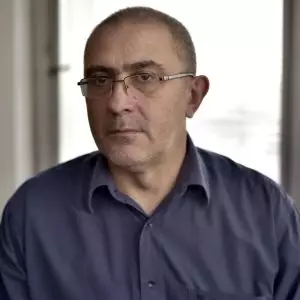
"Instead of state institutions, within their competences, solving problems in Serbia, the president of the state." Aleksandar Vučić he goes around the villages and gives what he needs and spreads it like that corruption", said economist and foreign investment consultant Milan Kovačević.
He said that the competent institutions, solving citizens' problems, instead of Vučić, would "raise" the level of responsibility in a democratic society.
"If the competent institutions would start doing their job, it would be a way for society to enter 'normal'. However, in Serbia anarchy reigned," Kovačević told the Beta agency, evaluating Vučić's visits to villages and offering solutions, both for local and personal demands of citizens.
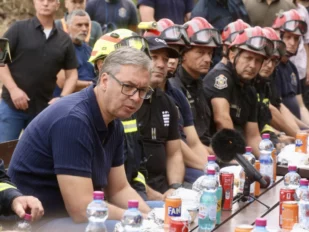
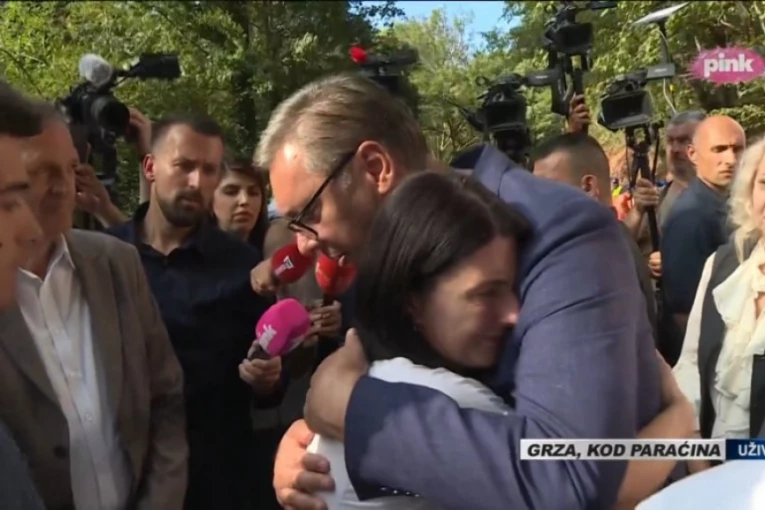
In the last twenty days, Vučić visited local communities in Serbia and on the spot, at the request of the locals, approved the construction of local roads, agreeing on who could get how much of that infrastructure, then he promised to equip health clinics, rebuild schools, build water pipes, employ certain citizens, help heroes from Košar and cures for rare diseases.
Vučić made those promises in the shortest possible terms, and the only thing he said he was not sure he would be able to provide was cheaper collagen for knees that a citizen asked for. When he arrived at the company "Gerber-Export" last week, he said that he "brought financial aid to save that company."
It is difficult to expect the Constitutional Court to preserve legality
Kovačević said that Vučić is helping corruption in that way.
"If the law does not work in a country, Sicilian corruption and crime do," assessed Kovačević.
According to him, the government does not improve what raises the quality of life of citizens, but "only talks about how many kilometers of highways have been built and where one car passes every five minutes."
"Anyone who breaks the law, even if he is the president of the country, should be questioned by the police and put in prison. The police should say, 'Mr. President, we are taking you to the hearing because it cannot be done that way according to the law,' and in Serbia it is the other way around because if someone even thinks something against the supreme authority, he is punished or fired from his job," Kovačević said.
He emphasized that it is difficult to expect the Constitutional Court to preserve legality because it misses even minor violations of regulations, even though the Constitution states that it is the only one that ensures that laws are in accordance with the highest legal act of the state.
"The law on the Constitutional Court states very clearly that the Constitutional Court, ex officio, controls whether laws are in accordance with the Constitution, and not only does it not do that, it also rejects initiatives to evaluate the legality of some regulations," Kovačević said.
He pointed out that he had turned to the Constitutional Court several times for several things, but that institution did not assess the requests as either legal or illegal, but refused to investigate the problem he drew attention to.
Live bribery: A citizen claims that SNS offered her a job in exchange for capillary votes
Citizens deprived of the right to own EPS shares
One of the recent demands, as Kovačević said, is to examine the legality of the procedure by which citizens were deprived of the right to own 15 percent of shares in the Electric Power Company of Serbia, which were transferred to state ownership.
"The law says that those shares are the property of Serbian citizens, and the Constitutional Court answered me that they will not check that," said Kovačević.
He added that such a decision was made possible "in some segments of the catastrophic amendment to the Constitution in 2022" which provide that "anyone can put a request in the drawer, so the one who broke the law is a free criminal".
According to Kovačević, the Constitutional Court acts by making a decision by three judges out of 15, so it can be concluded that the Constitutional Court is "very permeable" to illegal decisions.
"When the Constitutional Court acts in such a way that some citizens would be against the president giving people what they are asking for," Kovačević said.
Weak public reaction
He emphasized that the public's reaction to such behavior of the president (Vučić) is "flabby" and that it will be difficult for society to return to a normal state that functions through institutions from such a state.
"The law does not work in Serbia, even though Serbia is a constitutional republic and should be a democratic state, but one thing is how it is regulated, and what is happening in reality. Looking at the reality, Serbia is not a democratic state, so the president can do whatever he wants," Kovačević said.
He pointed out that it is almost unknown what part of the budget is used for, and it would be normal for the competent authorities to discuss what some of the money will be used for, instead of Vučić distributing what he wants, and in this way the obligations of the state are increasing, and there is an increasing lack of money where it would be necessary, which, as he said, can be seen now when Serbia is engulfed by fires and lack of water.
Source: Beta
Only in August: Save three thousand dinars on the annual subscription to the digital edition of "Vremena"! Take advantage of the discount here and support independent journalism.