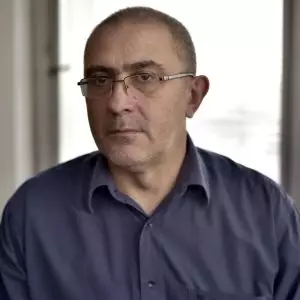
"If Putin succeeds and Ukraine loses the war, another ten million people could become refugees," he says Deutsche Welle migration expert Gerald Knaus.
Russia now reports new conquests of Ukrainian territory almost every day, writes Deutsche Welle. Both sides are fighting fiercely, firing rockets and using drones. But one thing is clear: Russia is advancing, is better equipped and recently even started using the term "war" rather than "special military operation". At the same time, international support for Ukraine is declining.
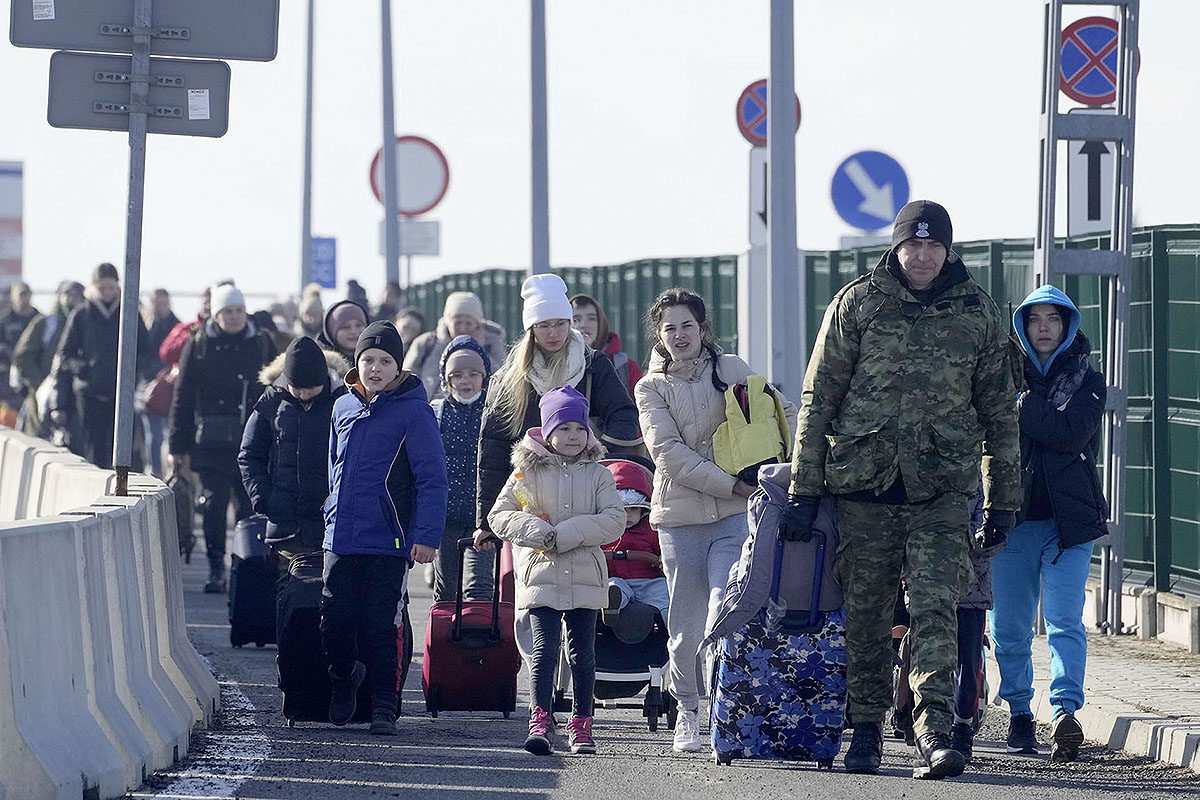
"If big cities like Kharkiv and others are destroyed now, if the number of victims increases and hope decreases, then we may experience the largest movement of refugees in the world since the 1940s," warns migration expert Gerald Knaus.
On the other hand, the expert on internal affairs of the German Social Democratic Party, Helge Lind in an interview for DW relativizes such a scenario.
"I don't expect that number to be as astronomical as is rumored." However, it is quite possible that there will be an increase in the number of refugees, that there will be further dramatization of the war. But there is no reason to say that there is now a danger of a huge wave of refugees," said Lind.
Germany received the most refugees
Two years ago, when the Russian army invaded the whole of Ukraine in violation of international law, solidarity in Germany was great. People and politics spontaneously helped Ukrainian refugees.
Refugees from Ukraine do not have to go through the bureaucratic asylum procedure in Germany, they have the right to social assistance, free medical care and language courses. And they can work immediately.
According to the media service "Integracija", out of a total of 4,3 million war refugees from Ukraine, there are currently around 1,15 million in Germany. Their number is constantly increasing.
Politicians from the opposition conservative parties CDU and CSU are already looking at it with concern.
"We as Europeans have a special responsibility for war refugees from our immediate neighborhood." But, of course, our capacities will reach their limits at some point," CDU politician Torsten Frei told DW.
Shortly after the start of the war, most Ukrainians fled to neighboring countries, especially Poland. As many as 1,6 million Ukrainians were once registered there, while today there are slightly less than a million of them.
Now Germany has the largest number of war refugees from Ukraine. However, if it is calculated in relation to the number of inhabitants, a different picture is obtained: Bulgaria has a share of refugees of 3,4 percent, Poland and the Czech Republic 2,6 percent each, and Germany only 1,4 percent. This was calculated by migration researcher Gerald Knaus.
Appeal for European solidarity
Torsten Frei (CDU), on the other hand, criticizes the fact that, taking into account the absolute number of refugees, "Germany has to deal with the biggest burden". He believes that the German government should urgently work on the even distribution of Ukrainian war refugees.
"Only the province of Baden-Württemberg received more war refugees from Ukraine than the whole of France." Baden-Württemberg has 11 million inhabitants, and France has 68 million," Fry told DW.
Helge Lind from the ruling SPD party understands.
"When refugees are faced with the choice of which country to go to, France, Belgium, Italy, and if the social conditions in Germany are clear, with the possibility of direct employment and better social benefits, then it is understandable that they are more likely to come to Germany." , Lind stated.
Is Germany ready for more war refugees from Ukraine?
Russia's war against Ukraine is claiming more and more victims. People die, flee or are exiled. Putin could even win or, it is believed, he could permanently annex part of the country and spread terror.
"The European Union is not prepared for the worst scenario that could follow," criticizes Gerald Knaus. Government and opposition politicians do not know what to do, because more and more people from other countries are seeking protection in Germany.
Torsten Fry (CDU) calculates that 300.000 more asylum applications will be submitted this year.
"It also directly affects the Ukrainian war refugees, for whom there is a lack of housing and, in particular, integration capacities," says Fry.
Helge Lind expressed concern and stated that municipalities and cities are already warning that they are on the edge of capacity, which could lead to a new debate on the topic of refugees in Germany.
However, Lind, Fry and Knaus agree on one point: the best thing would be to give Ukraine massive military support so that no more people have to flee the war.